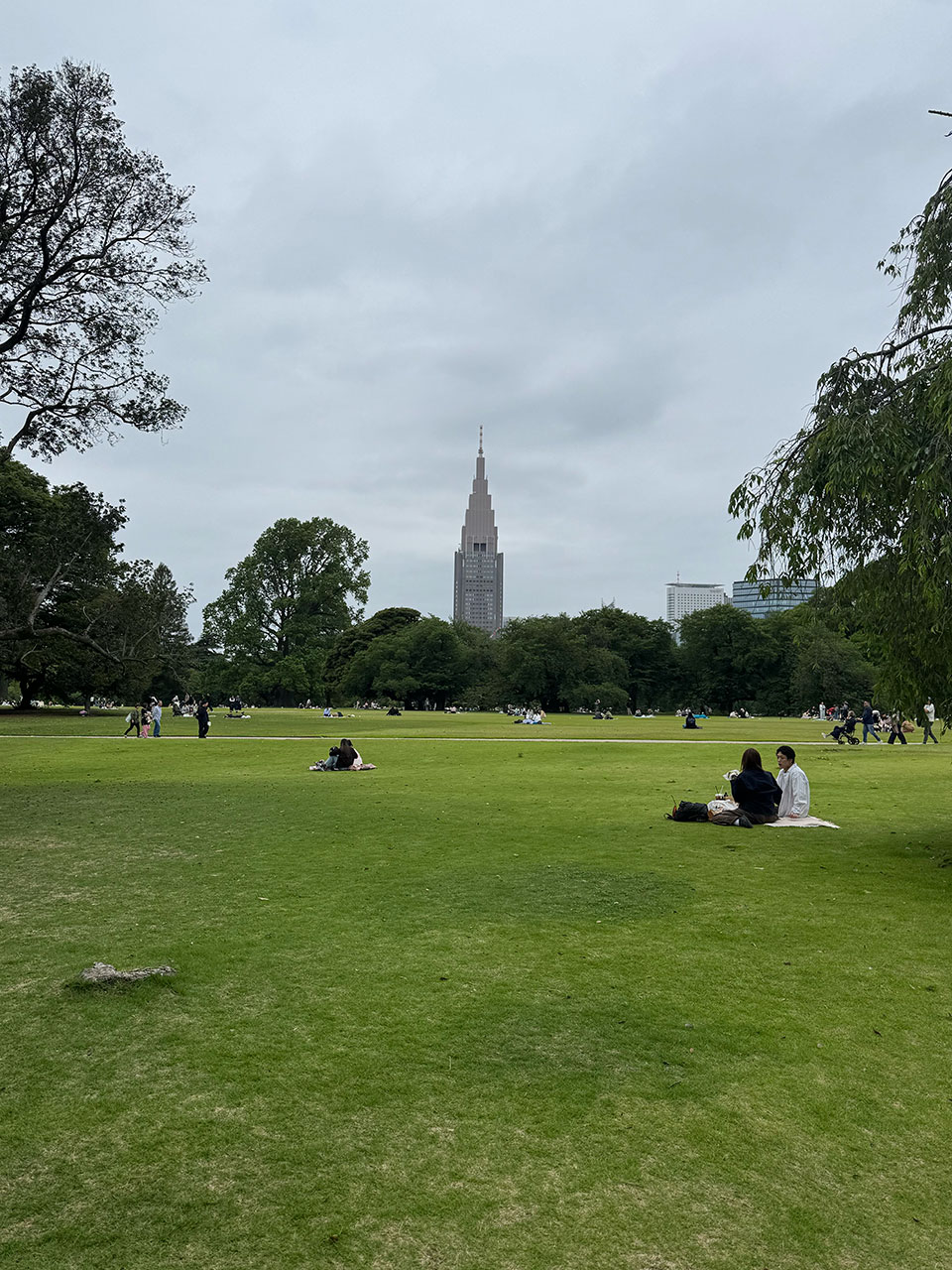
Shinjuku Gyoen is one of the most popular parks among international visitors to Tokyo. Located in the heart of the city, it covers 58.3 hectares—about the size of 12 Tokyo Domes. It is also a historic place that has witnessed many turning points in Japanese history.
The Origins: Land Granted by Tokugawa Ieyasu
The history of Shinjuku Gyoen goes back even before the Edo period.
In 1591, twelve years before the Tokugawa Shogunate was established, Tokugawa Ieyasu granted this land to one of his retainers. At the time, an important road connecting Edo (present-day Tokyo) and Yamanashi passed nearby. However, the area was still largely undeveloped and was probably nothing more than a vast stretch of land.
Naito-Shinjuku: The Origin of the Name “Shinjuku”
In 1698, the Tokugawa Shogunate reclaimed part of the Naito family’s land and established a post town along the Koshu Kaido highway.
This settlement became known as Naito-Shinjuku, which is the origin of the modern name “Shinjuku.” It developed into an important transportation hub where travelers and goods stopped on their journeys, attracting large numbers of people.
One of Japan’s Largest Agricultural Research Centers
After the Meiji Restoration, the site took on a completely different role.
As Japan sought to modernize and adopt Western technology, the government established a large agricultural research center here. The site became a hub for introducing new farming techniques and plants from around the world.
Some plants were imported from Europe, while others were brought from China. At its peak, more than 3,000 species of plants were cultivated here.
Imported plants were first tested at Shinjuku Gyoen to determine whether they could adapt to Japan’s climate and soil. As a result, many of the foreign plant species introduced to Japan were first grown and studied here.
During the guided tour, our guide pointed out a Himalayan cedar that dates back to this period.
Shinjuku Gyoen Helped Popularize Melons and Strawberries
Research on fruits such as grapes and melons was also conducted here.
An agricultural scientist named Itsuto Fukuba successfully cultivated grapes in an unheated greenhouse for the first time in Japan and also promoted melon cultivation. He later developed a strawberry variety known as Fukuba Strawberry, which spread throughout the country.
It is considered one of the foundations of modern strawberry cultivation in Japan.
The Roots of the University of Tokyo’s Faculty of Agriculture
Agricultural education was also carried out here.
A school established within the research facility later became Komaba Agricultural School, which eventually evolved into today’s Faculty of Agriculture at the University of Tokyo and the Faculty of Agriculture at Tokyo University of Agriculture and Technology.
Shinjuku Gyoen was not only a center for plant research but also one of the starting points of modern agricultural education in Japan.
Transformation into a Grand Western-Style Garden
As agricultural research expanded, educational and seed-distribution functions were transferred to other institutions.
As a result, the role of Shinjuku Gyoen changed. In 1879, it was donated to the Imperial Household and became an imperial botanical garden.
The Meiji government was promoting policies that placed the Emperor at the center of the nation, and the vast agricultural grounds were transformed into an imperial garden and research facility.
Later, a major redesign was carried out based on plans by the French landscape architect Henri Martinet. The present-day Shinjuku Gyoen was completed in 1906.
This was one of the largest national landscaping projects of its time.
That is why the garden combines three distinct styles: a French formal garden, an English landscape garden, and a traditional Japanese garden. It reflects how Meiji-era Japan absorbed Western culture while pursuing modernization.
Surviving War and Becoming a Public Park
During World War II, much of the garden was destroyed by air raids.
The lawns were converted into farmland, where potatoes and sweet potatoes were grown to help address wartime food shortages.
After the war, a new policy was adopted under Japan’s postwar constitution. Shinjuku Gyoen changed from an imperial garden into a national public park.
It officially opened to the public in 1949 and has welcomed visitors ever since.
Shinjuku Gyoen Cherry Blossoms
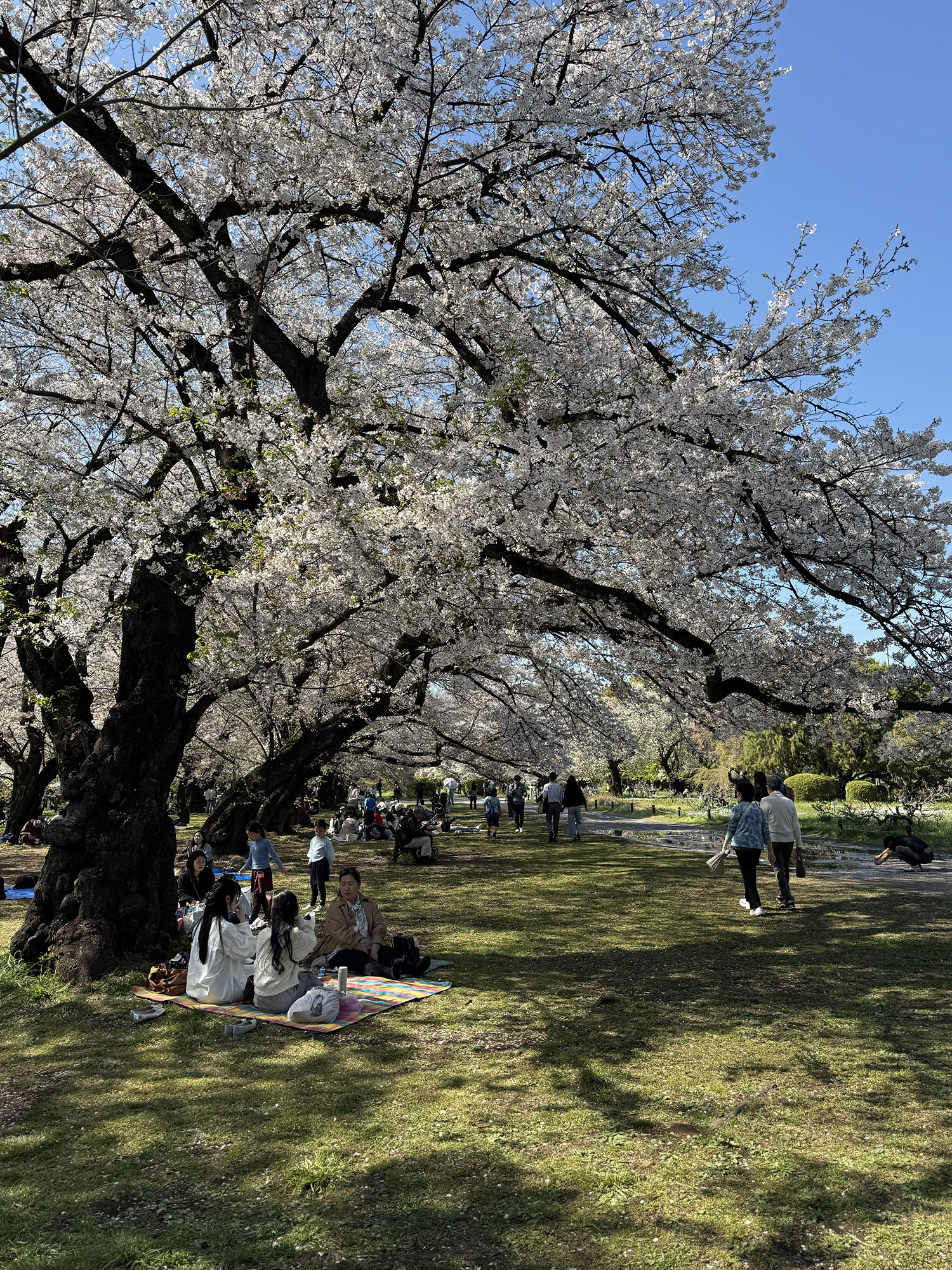
Shinjuku Gyoen is home to about 70 varieties and roughly 900 cherry trees, making it one of Tokyo’s most famous hanami spots. It’s not limited to Somei Yoshino; you can enjoy early- to late-blooming varieties over a long season.
From late March to late April, it’s highly recommended for hanami (flower viewing), and it’s especially popular with international visitors. As a cherry blossom spot, it’s one of the most well-rounded and complete places in Tokyo.
A Different Perspective When You Walk Through It
Today, admission costs just 500 yen.
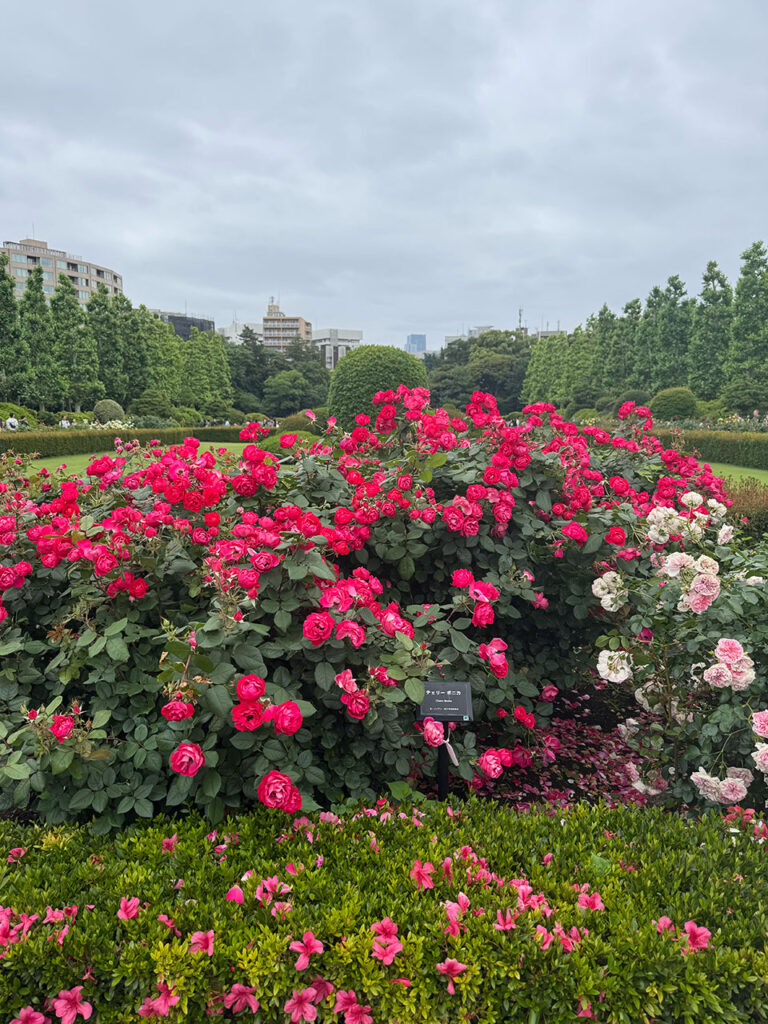
The park includes a greenhouse, rose garden, small museum, and comfortable rest areas. It is easy to spend two hours or more simply wandering around.
I visited on a Saturday, and the park was crowded with both local residents and international travelers.
Shinjuku Gyoen is much more than a beautiful park.
Among its lawns and towering trees are living traces of history. The site has transformed from:
- A samurai retainer’s estate
- A modern agricultural research center
- An imperial garden
- A public park
The land granted by Tokugawa Ieyasu in 1591 has evolved over more than 430 years into a place that anyone can enjoy today.
Standing in the middle of Shinjuku, one of Japan’s busiest entertainment districts, it is hard to believe that so much history survives here.
It is truly one of Tokyo’s most historic places.
Free Guided Walking Tours
Shinjuku Gyoen offers free volunteer-guided walking tours twice a month, on the second and fourth Saturdays, at 10:30 a.m. and 1:30 p.m.
If you are interested in the history or nature of the garden, these tours are well worth joining.