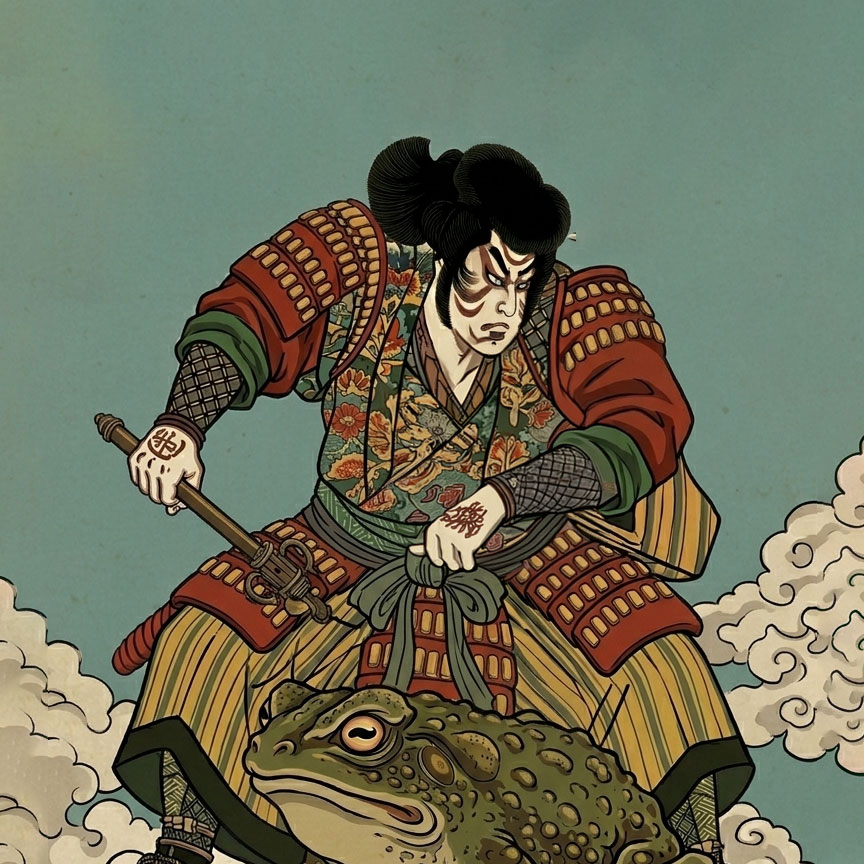
Kumonoito Azusa no Yumihari is a classic kabuki play known for its rapid costume changes (hayagawari) and supernatural story. It is often associated with the idea of “The Spider’s Thread,” but it is different from the famous short story by Ryunosuke Akutagawa.
The most memorable kabuki performance I saw at Kabukiza was Kumonoito Azusa no Yumihari.
Story
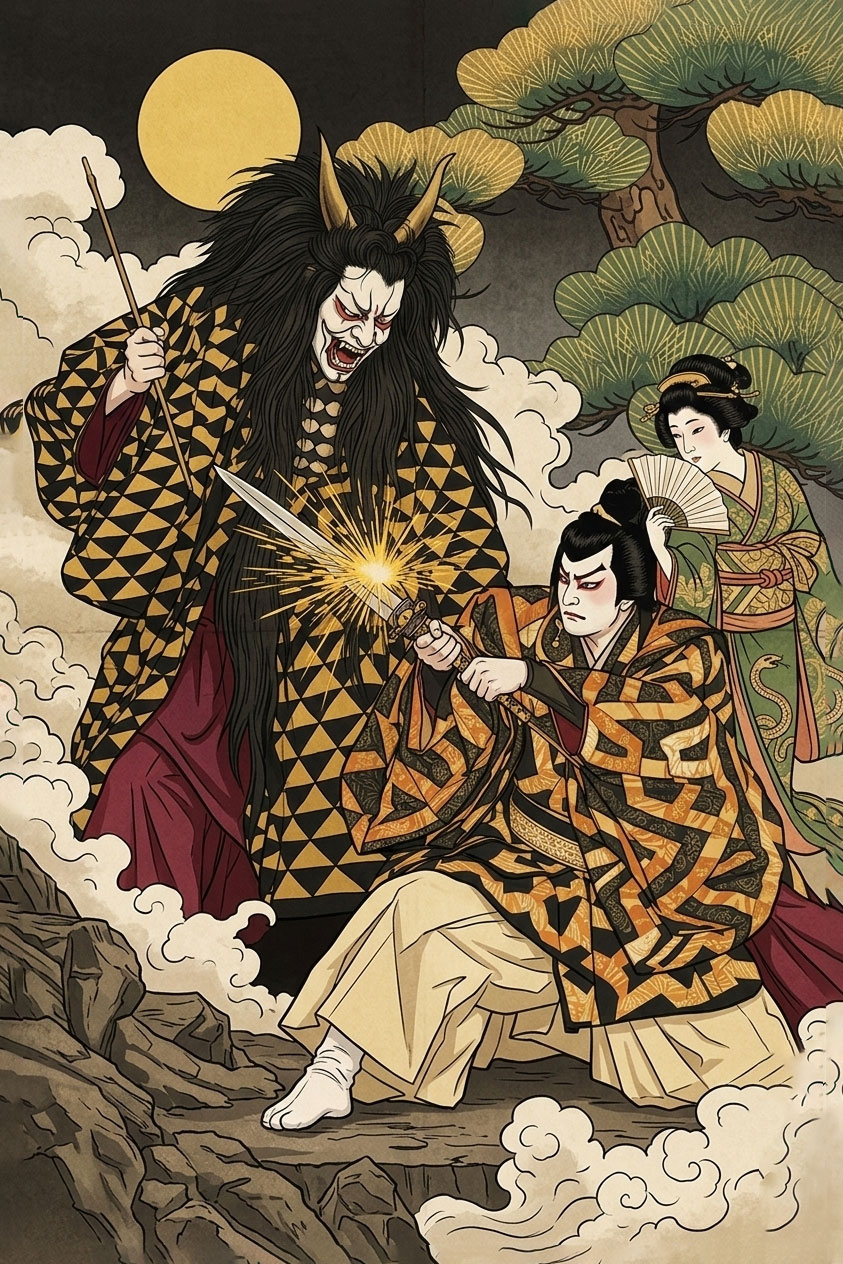
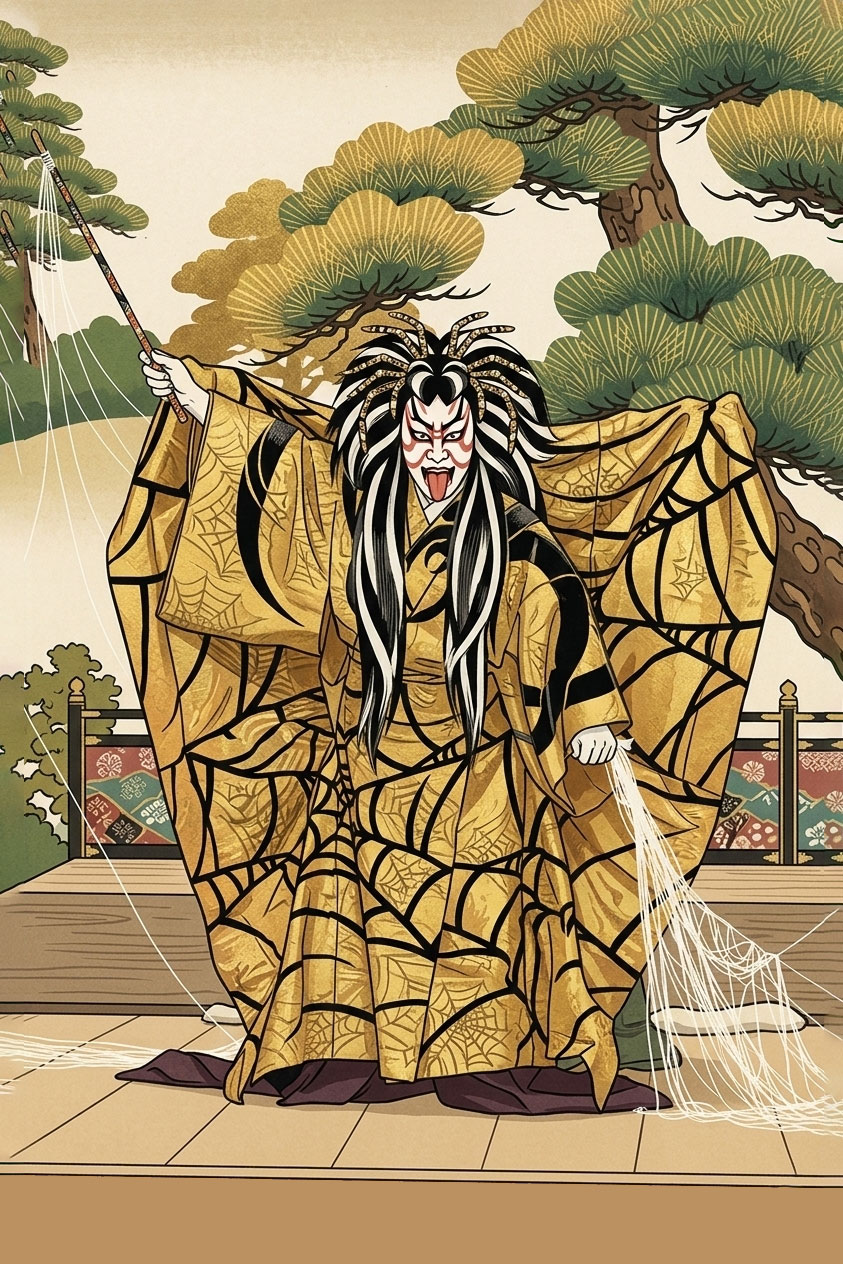
The story begins with the warrior Minamoto no Raikō lying ill, when a beautiful woman appears—who is actually a spider demon that can change its shape. The spider repeatedly attacks Raikō, vanishing and reappearing in different forms.
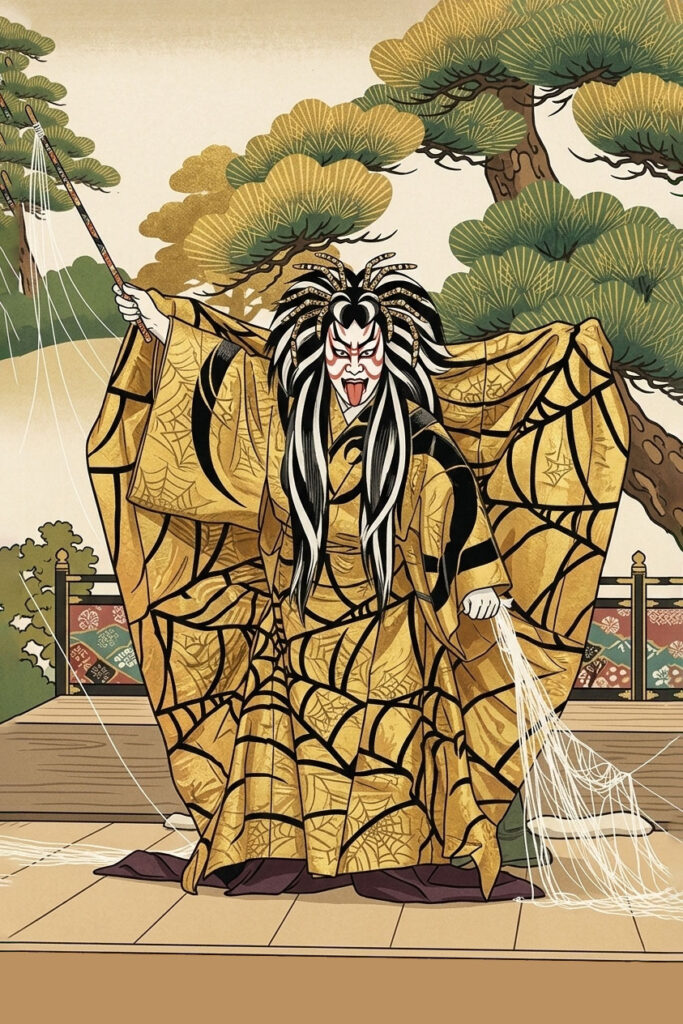
Kabuki Highlights: Hayagawari & Transformation
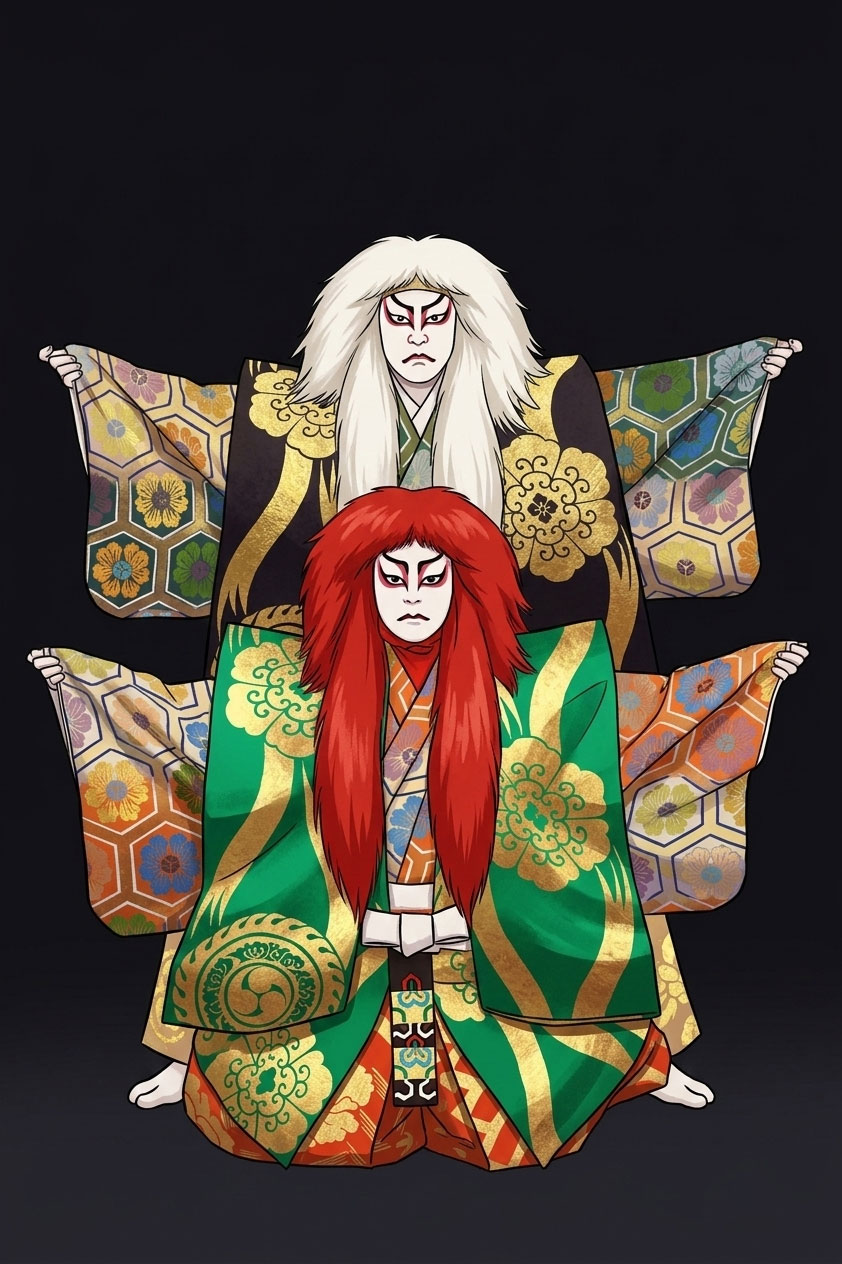
This play was first performed in 1765 and became famous for its “hayagawari” technique, where an actor changes costume and character instantly on stage. The focus is less on following the story and more on enjoying these rapid transformations. One actor becoming multiple characters on stage has a magical, almost cosplay-like appeal. In kabuki, this is called a “henge buyō” (transformation dance).
On this performance, the spider demon was played by Ukon Onoe, a kabuki actor, played the spider demon.
The combination of movement, sound, and costume made everything instantly understandable—even for those unfamiliar with kabuki. In the climax, after the final transformation, the spider switches sides, and the actor who had played it now joins the warriors.
Watching this play, it’s clear that kabuki sword fights aren’t about realistic combat—they’re about form and beauty. Every movement is designed to look best from the audience’s perspective, focusing on style and rhythm rather than realism. This is at the heart of kabuki choreography.
Tokyo Kabukiza Theatre
Kabukiza Theatre is the main venue for kabuki in Tokyo, located in Ginza. First opened in 1889, it has been rebuilt several times, most recently in 2013, blending traditional design with modern facilities.
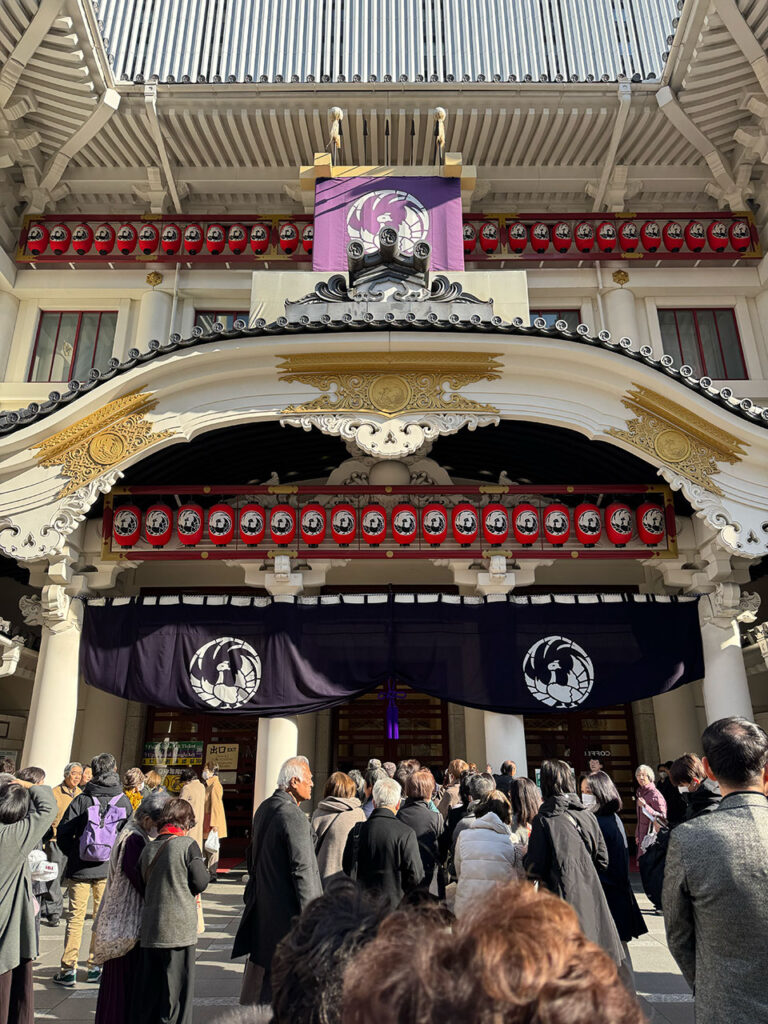
It’s considered the heart of kabuki, where both classic and new productions are regularly performed.