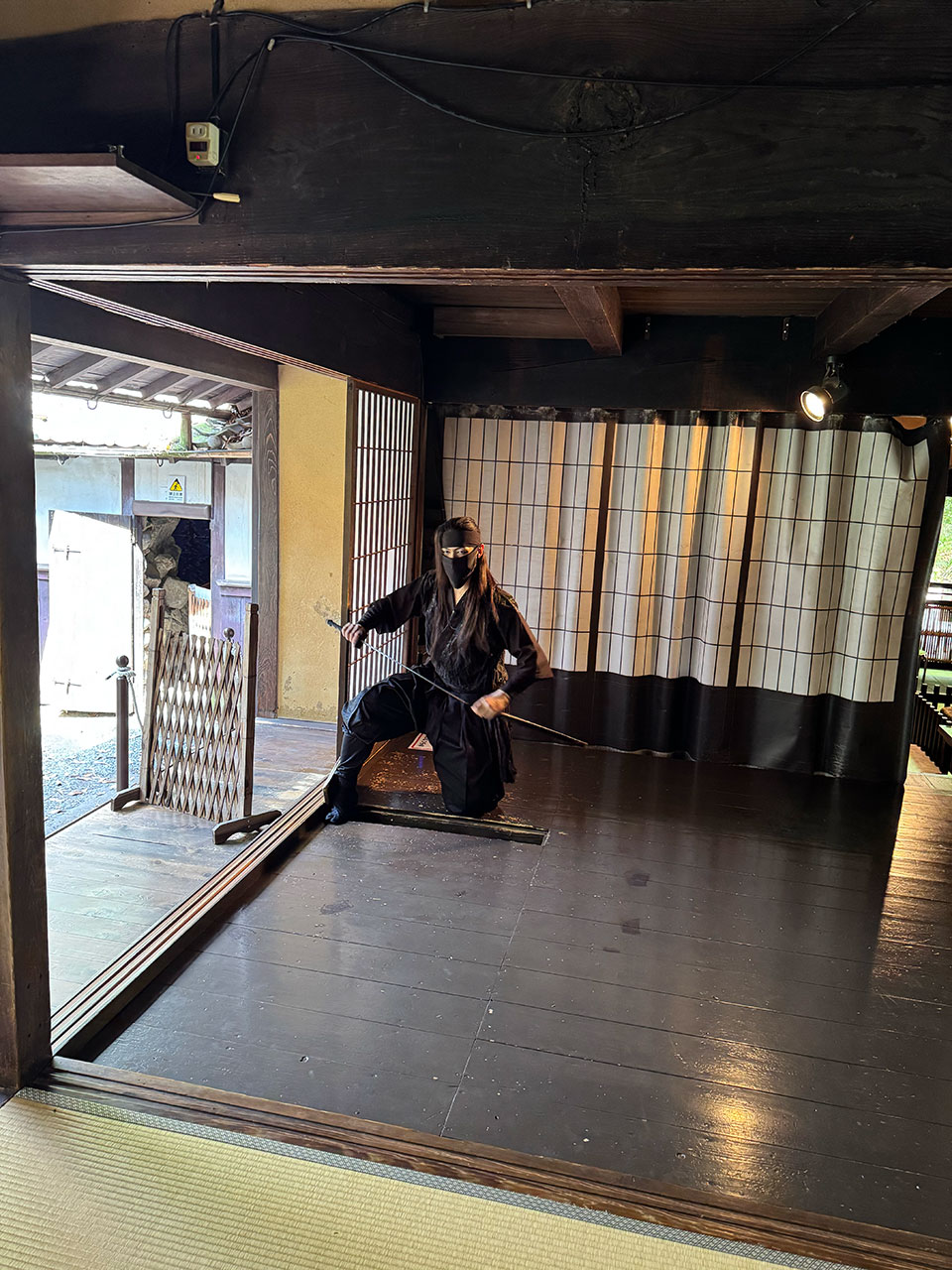
If you are interested in ninjas, you should definitely visit Iga village in Mie Prefecture (historically known as Iga Province). This is the area where the Iga ninja once lived, and you can learn about the true reality of ninja at the Iga-ryu Ninja Museum and Iga Ueno Castle.
Iga Ninja
Many people probably imagine a warrior dressed in black running across rooftops and throwing shuriken when they hear the word “ninja.” However, that image was largely created by kabuki and anime—the reality was quite different.
Ninja were not soldiers whose primary purpose was to fight. They were “professionals of information warfare” who carried out infiltration, espionage, and intelligence gathering.
Tree Chart of Ninjutsu (The Art of Stealth)
A diagram called the “Tree of Ninjutsu” displayed at the museum is highly interesting. It shows that ninja were people who mastered and applied three areas of knowledge to their daily lives and missions: Japanese Shinto, History, and Chinese military strategy.
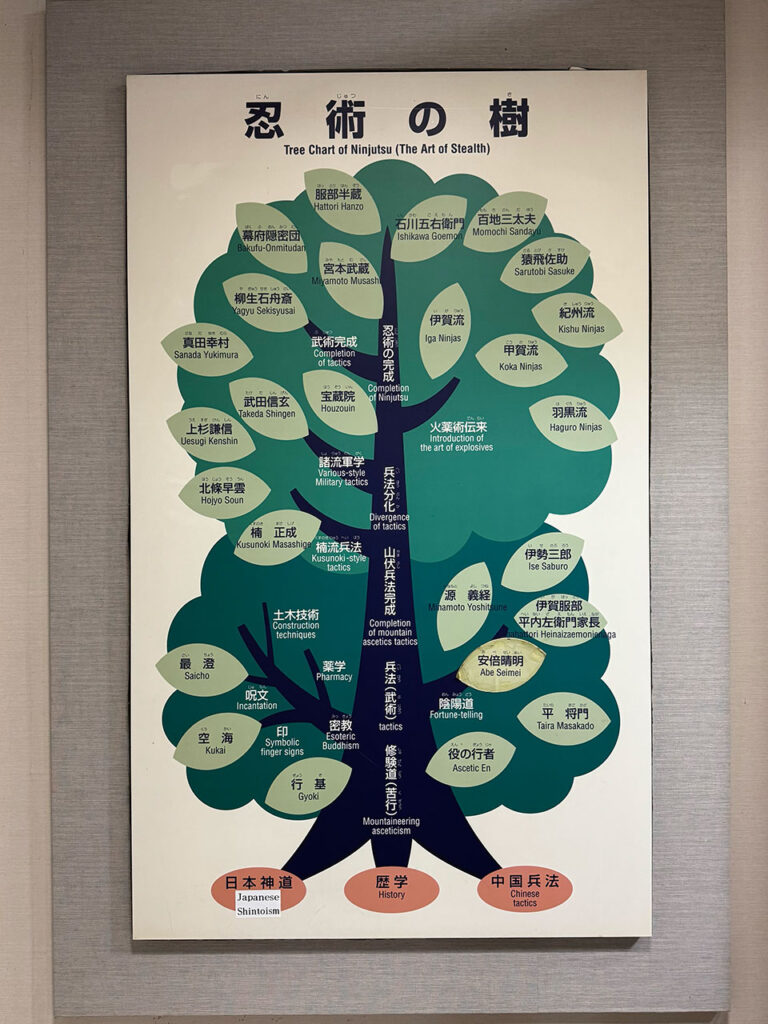
Their roots trace back to onmyoji (yin-yang diviners), shugendo practitioners, and yamabushi (mountain ascetics). In terms of the broader concept of ninjutsu, this lineage included not only Onmyoji Abe no Seimei and Hattori Hanzo, but also strategic samurai such as Kusunoki Masashige, Uesugi Kenshin, and Miyamoto Musashi.
Highlights of the Iga-ryu Ninja Museum
Admission here is 1,000 yen. Inside, there is an authentic ninja house that was relocated and reconstructed from a residence built about 200 years ago.
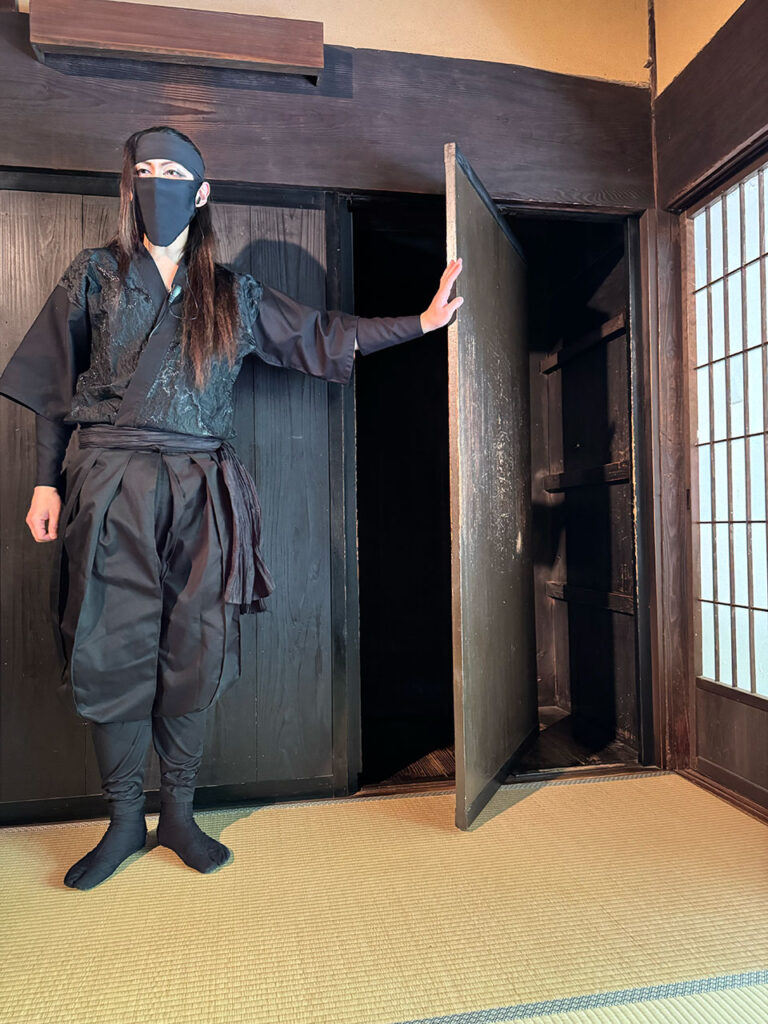
It features various trick mechanisms like revolving walls and hidden staircases, which a guide dressed as a ninja explains through live demonstrations.
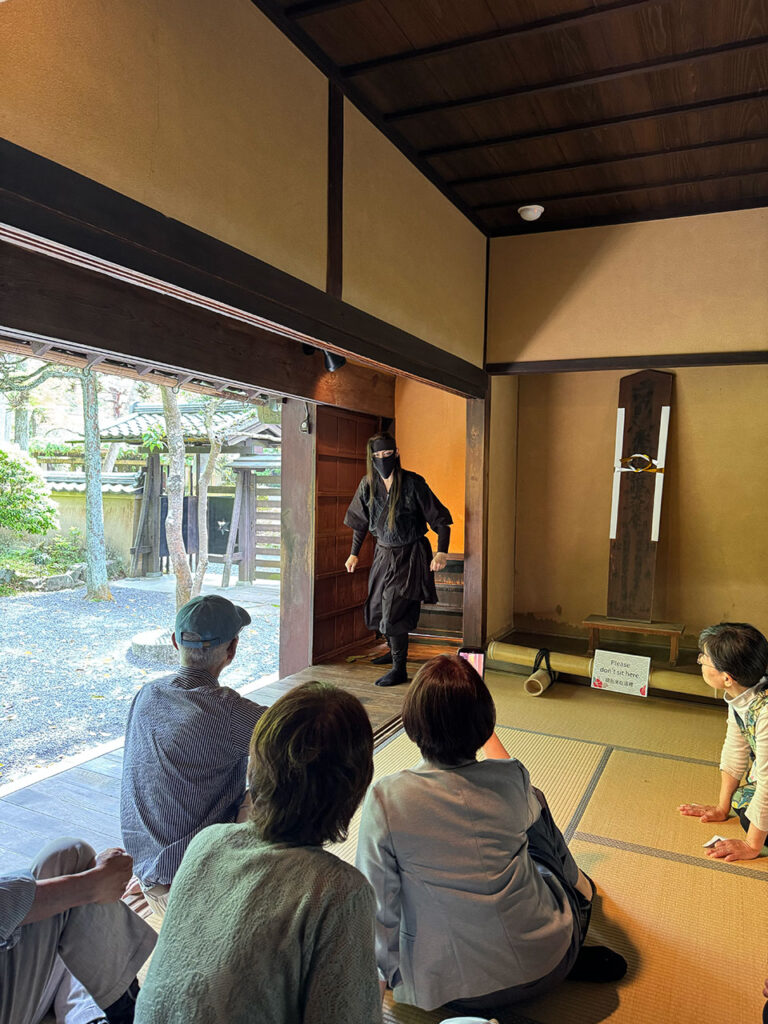
Seeing hidden doors and ninja tricks right in front of your eyes makes even adults exclaim in awe.
Ninja Myths vs. Reality: The Truth About the Black Attire
Ninja attire was not the pitch-black color often imagined; in reality, navy blue or grey was more common. Wearing pure black at night actually makes one’s silhouette stand out, making them easier to spot.
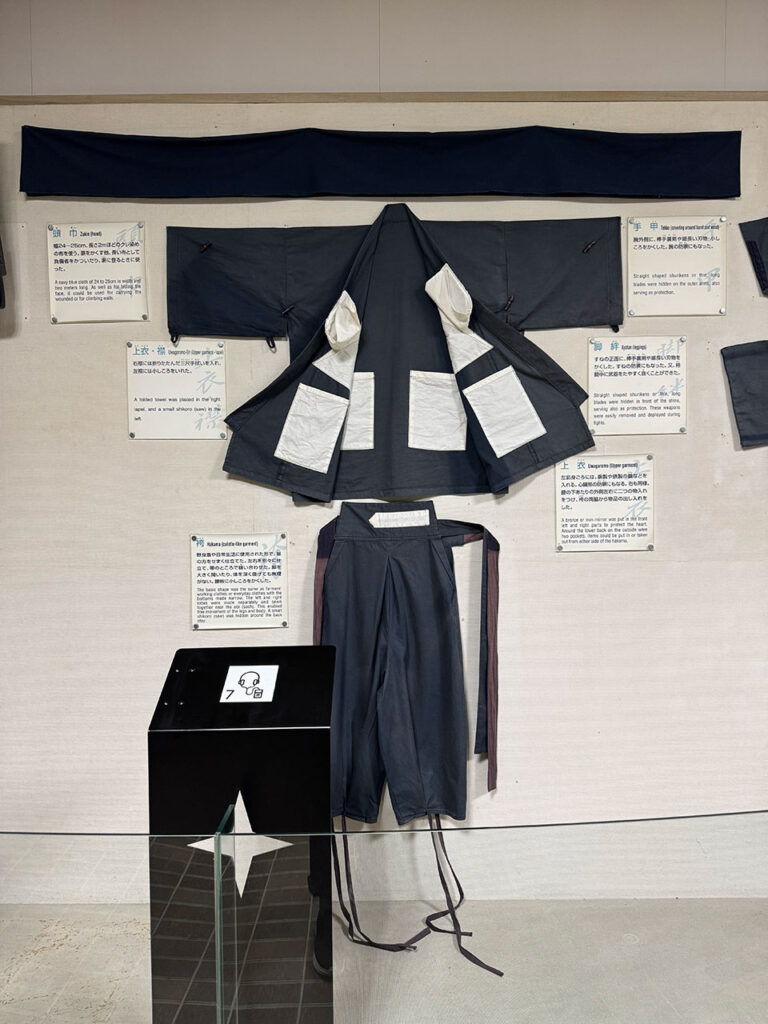
The image of the “ninja in black robes” is said to have originated from theatrical techniques in kabuki. In kabuki, backstage stagehands called “kurogo” wore black clothes to move stage props. There was a theatrical convention where the audience treated them as “invisible,” and this specific look later became fixed as the visual representation of ninja.
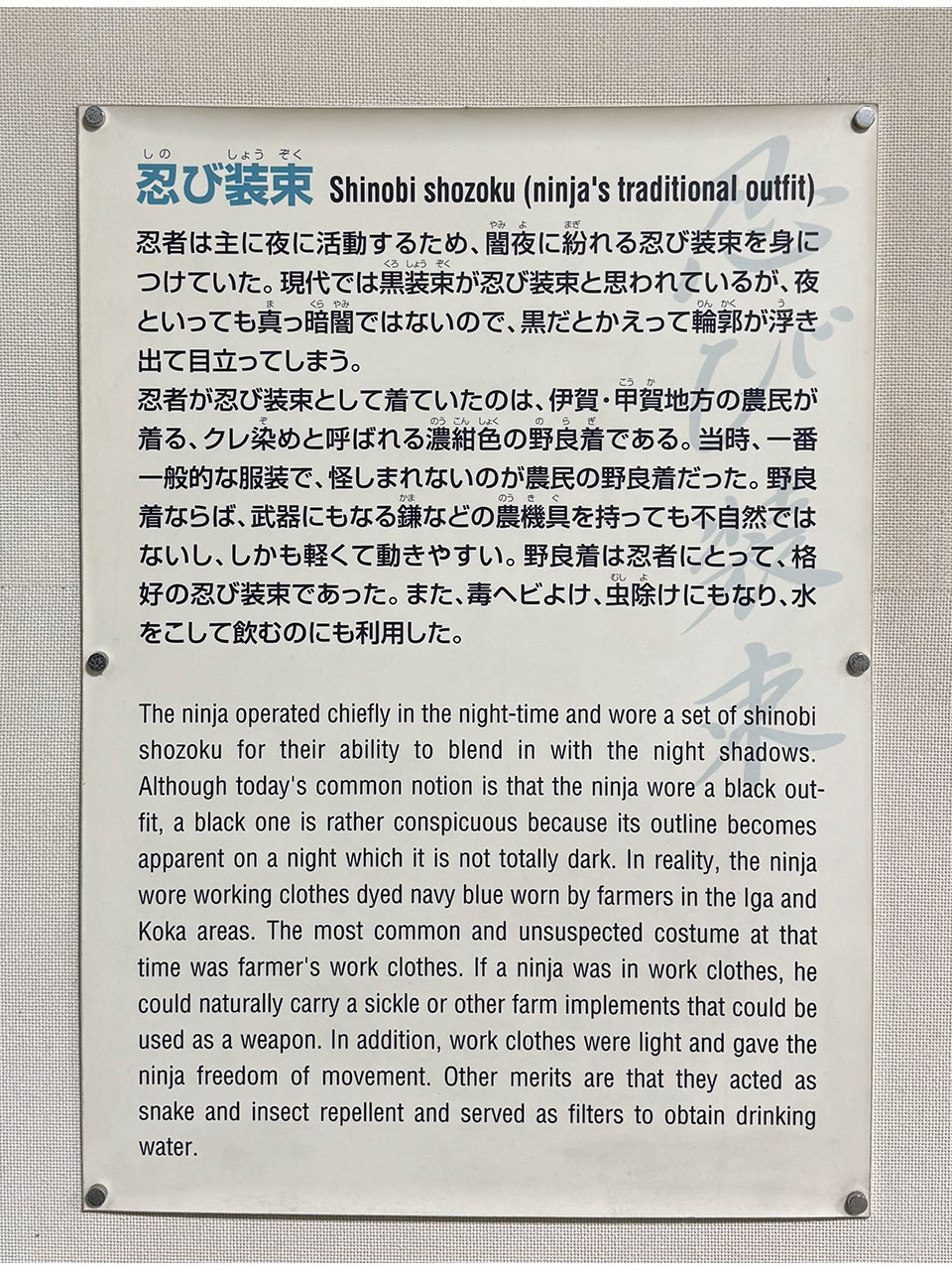
The Everyday Life of a Ninja Was Unexpectedly Low-Key and Harsh
During the Warring States period, many ninja lived as ordinary farmers. While tilling the fields during the day, they cultivated medicinal herbs and formulated their own remedies. Their training began in the afternoon. They studied not only martial skills like swordsmanship and hand-to-hand combat, but also a wide range of subjects including reading, writing, the abacus, memory techniques, and mental conditioning. To endure hunger, sleep deprivation, and long hours of concealment, they even had training to suppress the urge to use the restroom. They were truly a professional group that trained both their intellect and endurance to the absolute limit.
Why Did Ninjutsu Flourish in Iga?
Iga was surrounded by mountains, creating a complex terrain prone to heavy fog, making it incredibly difficult for outside forces to invade. Being close to Kyoto and Nara, many samurai and artisans who were defeated in battles fled to Iga.
They passed down their advanced knowledge and technical skills to local clans, creating the perfect environment for ninjutsu to uniquely develop.
Iga ninja vs Koga ninja
During the Warring States period, Iga was not under the strong control of a specific warlord; instead, it was operated autonomously by a collective of local clans. They were by no means enemies with neighboring Koga; they interacted regularly and maintained a friendly relationship.
While Iga operated as an autonomous alliance with particular strengths in gunpowder and tactics, Koga had a distinct leadership structure and excelled in medicine and pharmacology.
The Tensho Iga War
During the Warring States period, Iga maintained a highly independent stance. The first to launch an invasion was the son of Oda Nobunaga (Nobukatsu). However, the Iga forces used guerrilla tactics to completely repel them. To avenge this humiliation, Oda Nobunaga himself later invaded Iga with a massive army of tens of thousands. This conflict is known as the “Tensho Iga War.”

The fierce onslaught devastated Iga, forcing many survivors to scatter across the country. However, this dramatic shift ultimately caused Iga’s ninjutsu techniques to spread throughout Japan.
Timeline: The Rise and Fall of Iga Ninja
- 1579: The First Tensho Iga War.
- 1581: The Second Tensho Iga War (Iga is devastated; surviving Iga ninja scatter across Japan).
- 1582: The Koshu Conquest (Oda Nobunaga and Tokugawa Ieyasu destroy Takeda Katsuyori).
- 1582: The Honno-ji Incident (Akechi Mitsuhide’s coup against Oda Nobunaga).
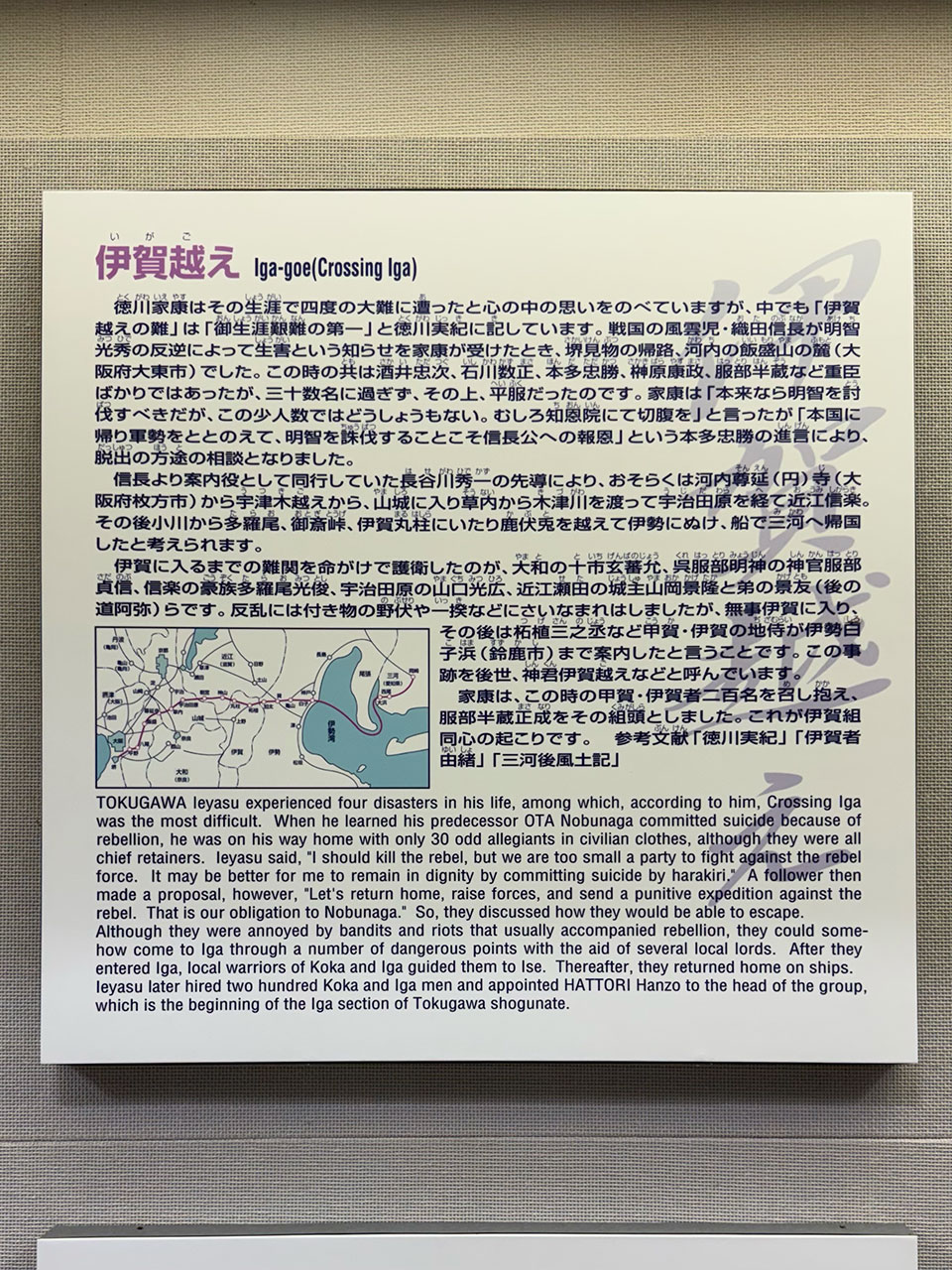
- 1582: The Escape Through Iga (Hattori Hanzo and others utilize the Iga network to rescue Ieyasu).
- 1600: The Battle of Sekigahara (Ieyasu wins the decisive battle that divides the nation).
- 1603: Establishment of the Edo Shogunate (Ieyasu becomes Shogun, beginning the Edo period. He employs the Iga clan as his direct retainers, with Hattori Hanzo among them).
Iga Ueno Castle
Located right near the Iga-ryu Ninja Museum is Iga Ueno Castle, famous for its beautiful, towering stone walls.
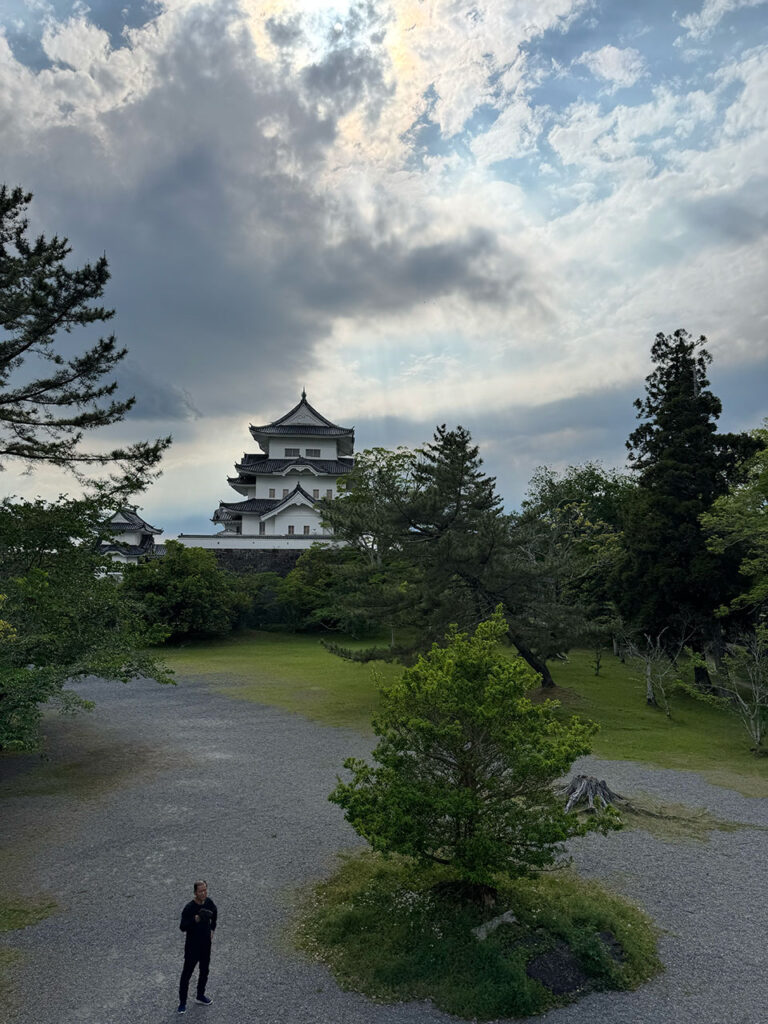
The current castle keep was rebuilt out of wood in the Showa period.
While it is a peaceful tourist destination today, this modern castle did not exist during the Tensho Iga War. Back then, a temple called Heiraku-ji stood on this ground and served as a fortress where the Iga forces set up camp to confront the Oda army.
Looking at the serene scenery today, the intense history of war seems to overlap with the landscape.
Ninja of the Edo Period
Entering the Edo period, Japan became more peaceful and large-scale wars came to an end. Both samurai and ninja no longer needed to fight on the battlefield, and many took on roles closer to guards, police, or administrators. During this time, the role of ninja gradually became similar to that of ordinary samurai warriors. However, “ninja” did not exist as an official category within the shogunate’s class system, and very few records describing their actual activities remain today.
Hattori Hanzo
Hattori Hanzo was a famous samurai who served Tokugawa Ieyasu. He is especially famous for helping protect and guide Ieyasu during the “Iga Escape” after the Honno-ji Incident, when Ieyasu fled from Sakai back to Mikawa. Although Hattori Hanzo is often described as a ninja, the second-generation Hanzo, Hattori Masanari, was actually a samurai serving the Tokugawa clan.
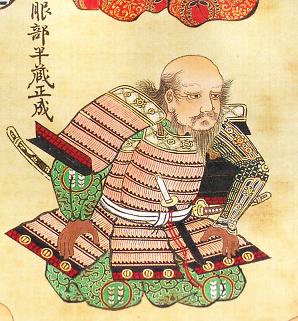
The first Hanzo, Hattori Yasunaga, is said to have been from Iga and may have worked as a shinobi. The Hattori family had long served Tokugawa Ieyasu and maintained connections with the Iga warriors while supporting the Tokugawa through security and military duties.
Hattori Hanzō (1542 – January 2, 1597) or Second Hanzō, nicknamed Oni no Hanzō, was a famous Samurai of the Sengoku era. He served the Tokugawa clan as a general and is credited with saving the life of Tokugawa Ieyasu, later helping him to become the ruler of united Japan.
https://en.wikipedia.org/wiki/Hattori_Hanzō
Ninjas in Kabuki During the Meiji Period
This mysterious existence was later turned into entertainment through kabuki plays during the Meiji period. Eventually, the image was adapted into movies and anime, becoming dramatically exaggerated over time into the ninja we recognize today.
The image of the ninja we all know was shaped through this long history blended with later theatrical fiction. If you walk through the streets of Iga knowing the real, historical facts, you will discover a completely different layer of depth and fascination.
Iga-ryu Ninja Museum Place
| Name | Iga-ryu Ninja Museum |
| Address | 117 Ueno Marunouchi, Iga City, Mie Prefecture 518-0873 |
If you can’t make it all the way to Iga, you can still experience the world of the ninja in Tokyo!