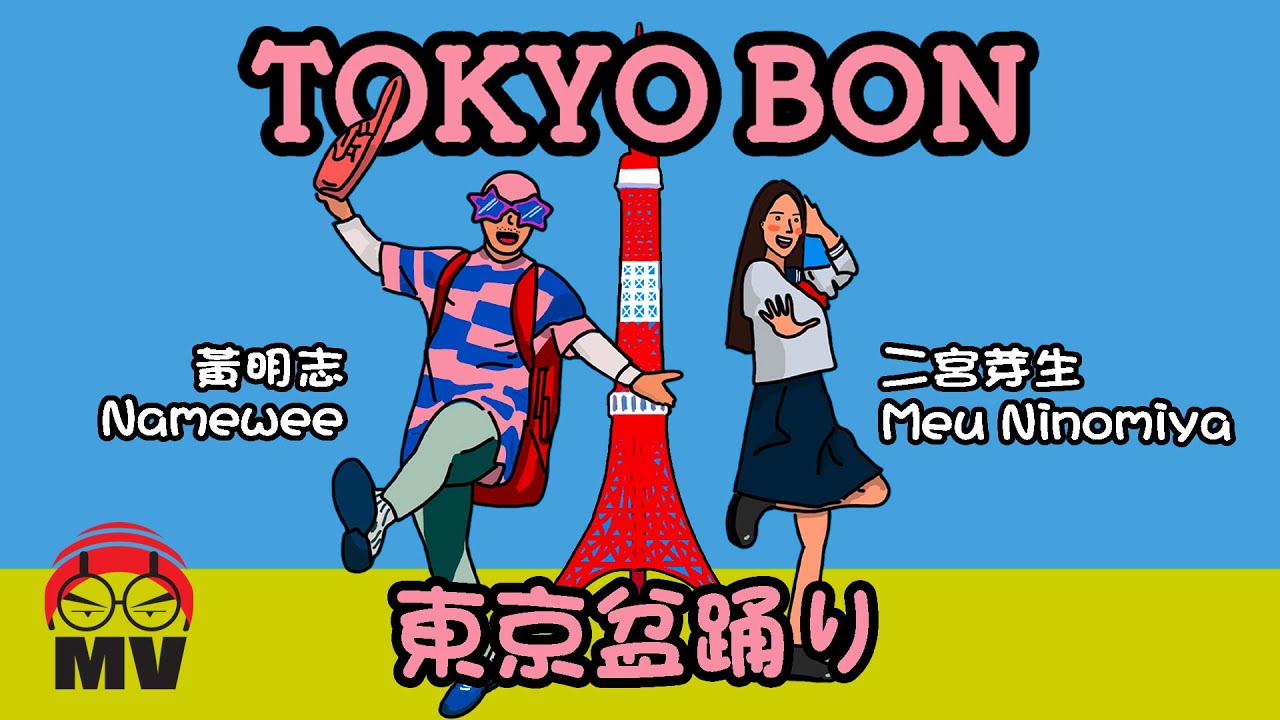
Tokyo Bon 2020 is a viral Japanese music video by Malaysian artist Namewee, featuring Bon Odori dance and Japanglish — a uniquely Japanese way of pronouncing English words. Released in 2017, it has surpassed 100 million views and remains one of the most fun introductions to Japanese culture for foreign visitors.
You can learn Japanglish with Bon Odori
The video starts with a foreign tourist who doesn’t speak Japanese asking a local woman, “Do you know any good restaurants around here?” Her reply is full of so-called “Japanglish” (Japanese-made English).
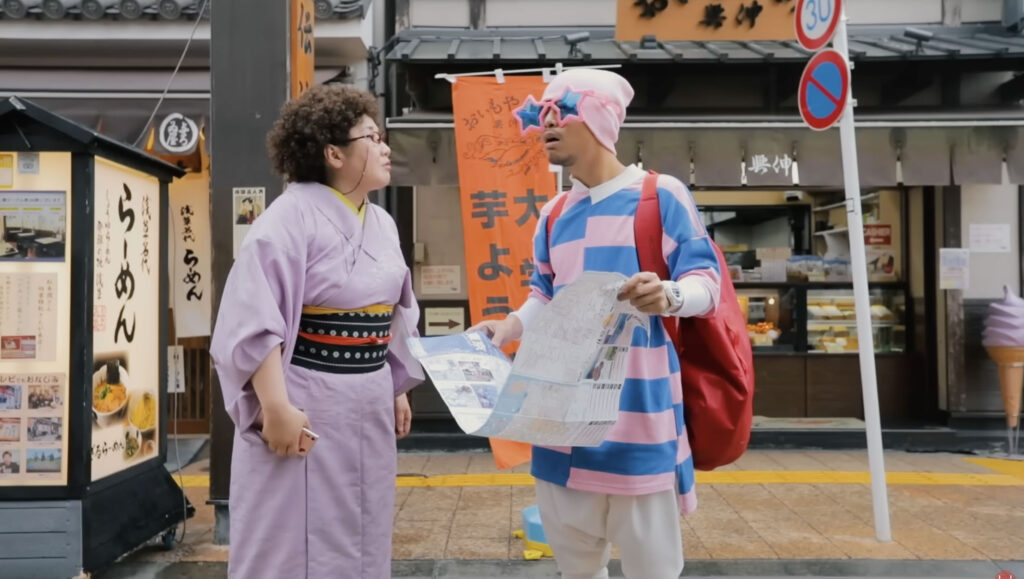
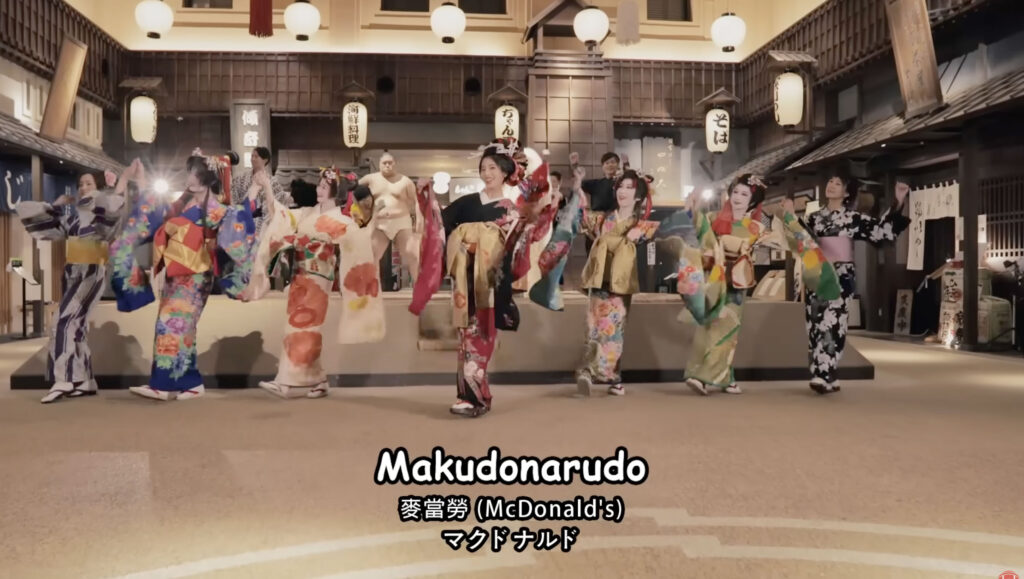
The song blends this Japanglish with Bon Odori, a traditional Japanese dance, creating a fun and slightly offbeat version of Japanese culture from an outsider’s perspective.
It’s especially enjoyable for people traveling to Japan or anyone interested in Japanese culture. The lyrics themselves are written in Japanglish, and the track is available on iTunes under the title “Makudonarudo.”
Created by Namewee, a Malaysian artist
Namewee is a Malaysian artist known for mixing humor, satire, and cultural themes in his work.
Namewee is both a singer and a filmmaker. His work often includes social commentary and cultural humor. He sometimes sparks controversy, but that also helps his content go viral.
The high school girl is played by Meu Ninomiya
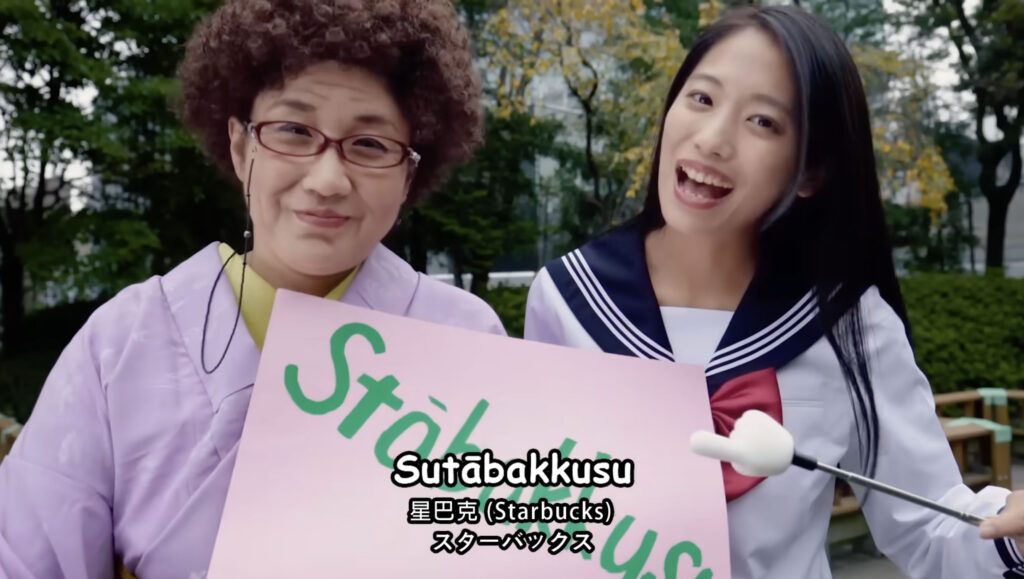
At first, an older woman guides people using Japanese-style English, but partway through, a high school girl also appears. They end up dancing Bon Odori together, though the language remains Japanese-accented English. The high school girl is played by actress Meu Ninomiya, who seems to be a performer as well.
The choreography was created by Ukon Takafuji
The choreography was created by Ukon Takafuji, a Japanese traditional dancer from a family with over 100 years of history in Kanazawa. Despite his strong traditional background, his style is very free and energetic.

His philosophy is simple: tradition shouldn’t be something stiff or difficult—it should be fun and shared by everyone. He believes Bon Odori can work as a universal form of communication that goes beyond language barriers. In collaboration with JICA, he has helped create local Bon Odori dances in different parts of the world.
His goal is to bring people together in one circle, regardless of nationality or culture. While people are dancing together, no conflict arises. There is also a message of peace behind his work.
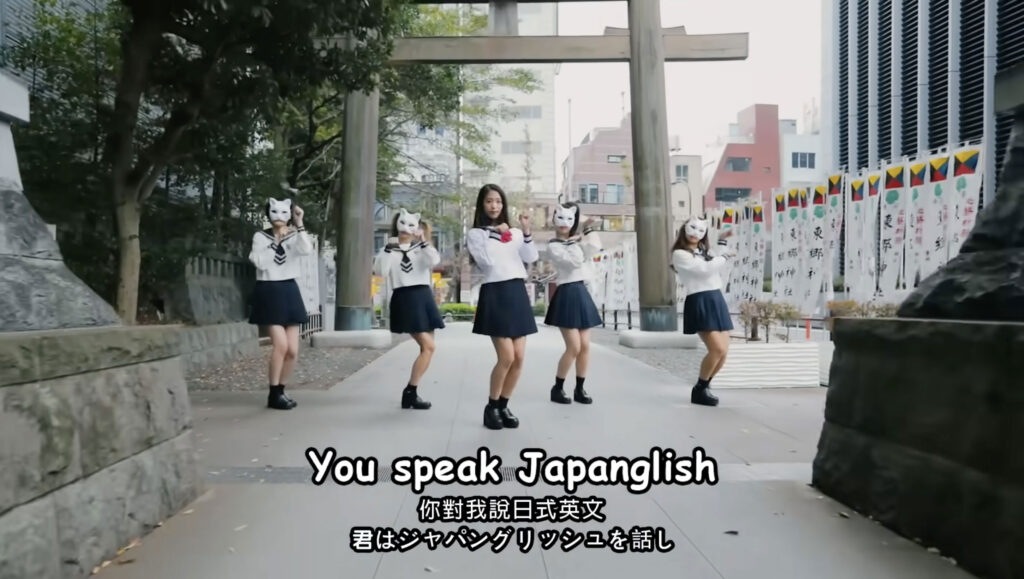
His choreography is very simple, with almost no difficult steps. Just by copying the movements, anyone can quickly join in and feel part of the group.
What Is Japanglish?
Japanglish is the uniquely Japanese way of pronouncing English loanwords. When English words enter the Japanese language, they are rewritten using the katakana alphabet — a phonetic system designed for foreign words. Because katakana can only represent a limited set of sounds, the original English pronunciation gets reshaped to fit Japanese phonetics.
The result is charming and sometimes hilarious. McDonald’s becomes Makudonarudo. Google becomes Guguru. Starbucks becomes Sutaba. These aren’t mispronunciations — they are the standard, accepted Japanese versions of those words, used every day by millions of people across Japan.
Why Does Japanglish Sound the Way It Does?
There are a few key reasons why English words change so much when they enter Japanese:
1. No consonant clusters. Japanese syllables almost always follow a consonant-vowel pattern. A word like “strike” can’t exist as-is, so it becomes sutoraiku — a vowel is inserted after each consonant.
2. No “L” sound. Japanese doesn’t have an L, so it’s replaced with R. “Lemon” becomes remon. “Love” becomes rabu.
3. No ending consonants (mostly). English words often end in consonants — “bus,” “beer,” “bed.” In Japanese, these almost always get a vowel added at the end: basu, biru, beddo.
4. Some sounds simply don’t exist. The English “V” is often replaced with “B,” so “vitamin” becomes bitamin and “violin” becomes baiorin.
Once you understand these rules, you’ll start hearing Japanglish everywhere in Tokyo — on menus, in convenience stores, on train announcements, and in everyday conversation.
Japanglish Is Everywhere in Tokyo
For first-time visitors to Japan, Japanglish can be both confusing and delightful. You might walk into a konbini (convenience store), order a sandoitchi (sandwich) and a koohii (coffee), and pay at the rejji (register) — and realize you’ve just had an entire transaction in Japanglish without knowing it.
This is exactly what makes Tokyo Bon 2020 so fun to watch. The video holds up a mirror to this everyday phenomenon and turns it into something joyful and shareable. Namewee’s outsider perspective captures the experience of many foreign visitors: you recognize the words, but they sound just different enough to make you do a double-take.
Japanglish Word List
- Makudonarudo (McDonald’s)
- Guguru (Google)
- Disuney (Disney)
- Sutaba (Starbucks)
- Famima (Family Mart)
- Konbini (Convenience Store)
- Selfie (Selfie)
- Taxi (Taxi)
- Hoteru (Hotel)
- Sebun Elebun(Seven Eleven)
- Basu (Bus)
- Biru (Beer)
- Sarariman (Salaryman / Office worker)
Japanglish Tips for Travelers in Tokyo
If you’re visiting Tokyo, knowing a few Japanglish patterns can genuinely help you get around and communicate. Here are some practical tips:
- Listen for the extra vowels. If a Japanese word sounds almost like English but slightly longer, it’s probably Japanglish. Aisu kuriimu = ice cream. Suupaa = supermarket.
- Drop the endings. Some words get shortened: Sutaba for Starbucks, Famima for FamilyMart, Makku for McDonald’s. Locals use these abbreviations naturally.
- Don’t be afraid to try. If you say an English word with a Japanese accent — slowly, adding vowels between consonants — there’s a good chance you’ll be understood. Japanese speakers are used to decoding it.
- Watch for katakana signs. Most menus and shop signs include katakana, which you can learn to read phonetically in just a few hours. It’s one of the fastest ways to navigate Tokyo as a newcomer.
Understanding Japanglish isn’t just a language tip — it’s a window into how Japanese culture absorbs and transforms outside influences into something entirely its own. And that’s exactly the spirit that Tokyo Bon 2020 celebrates.