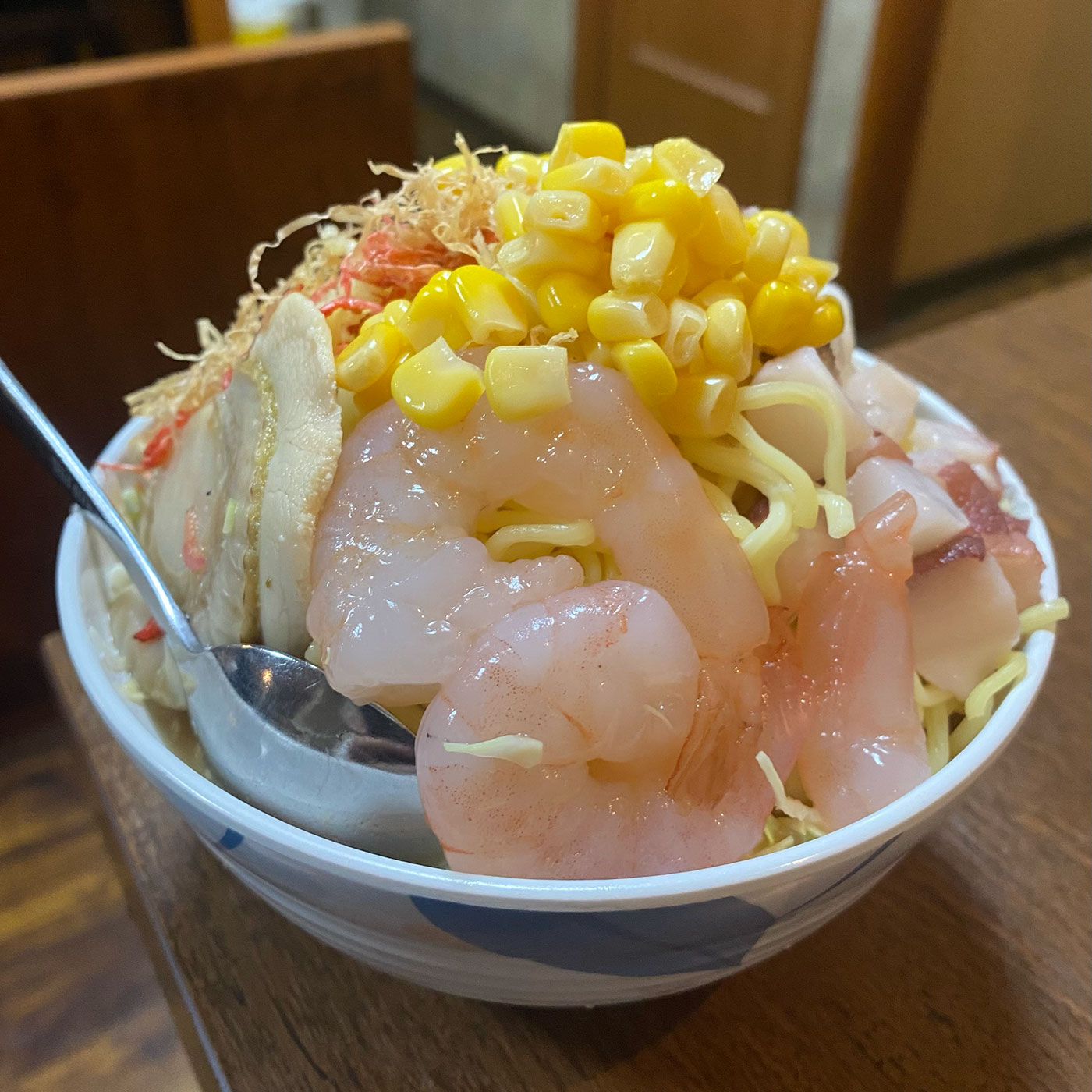
If you want to try monjayaki in Tokyo, Tsukishima is the most famous and recommended area. In this article, I’ll explain why you should eat monjayaki in Tsukishima, along with its history, culture, and how to enjoy it.
History of Tsukishima, Famous for Monjayaki
Tsukishima is known as the birthplace of monjayaki. At first glance, the area appears as a neat rectangular shape on the map, but it was actually created through land reclamation.
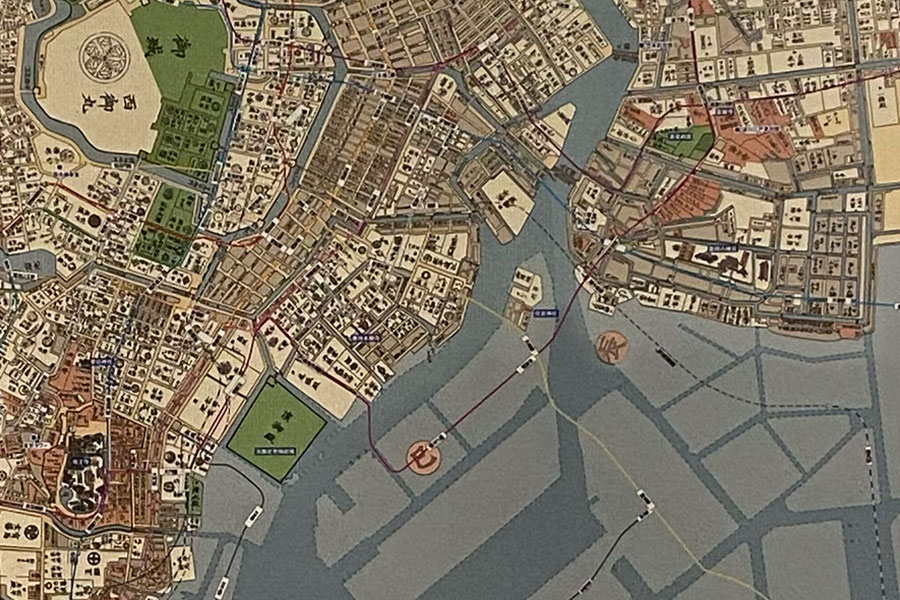
Originally, there was a small island called Tsukuda Island, where fishermen who came from Osaka lived during the Edo period. Later, land reclamation created the area known today as Tsukishima.
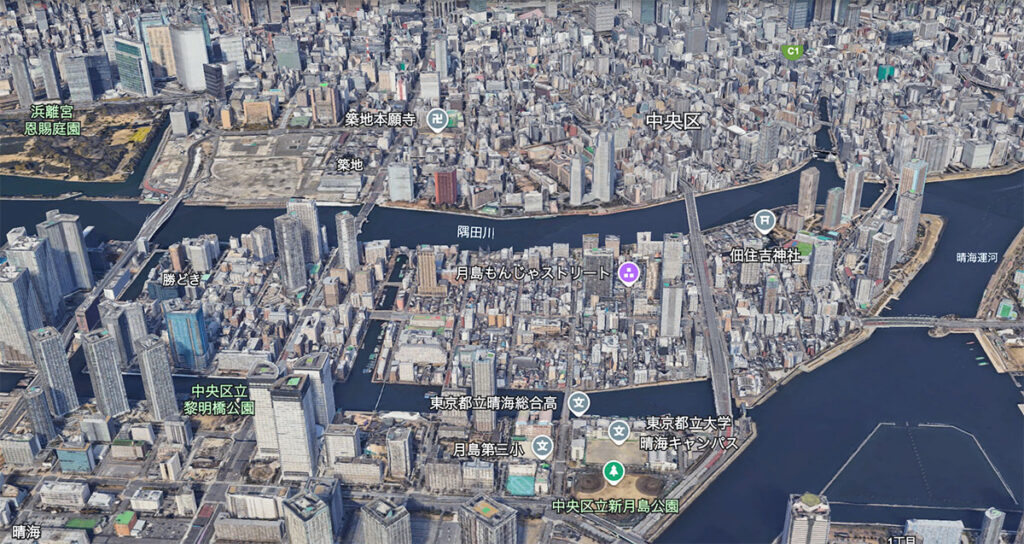
Today, it is a modern urban area filled with high-rise buildings, but it was originally built on reclaimed land from the sea. If you look at it on Google Earth, you can better understand how the area developed.
This historical background is one of the reasons why monjayaki culture developed in Tsukishima.
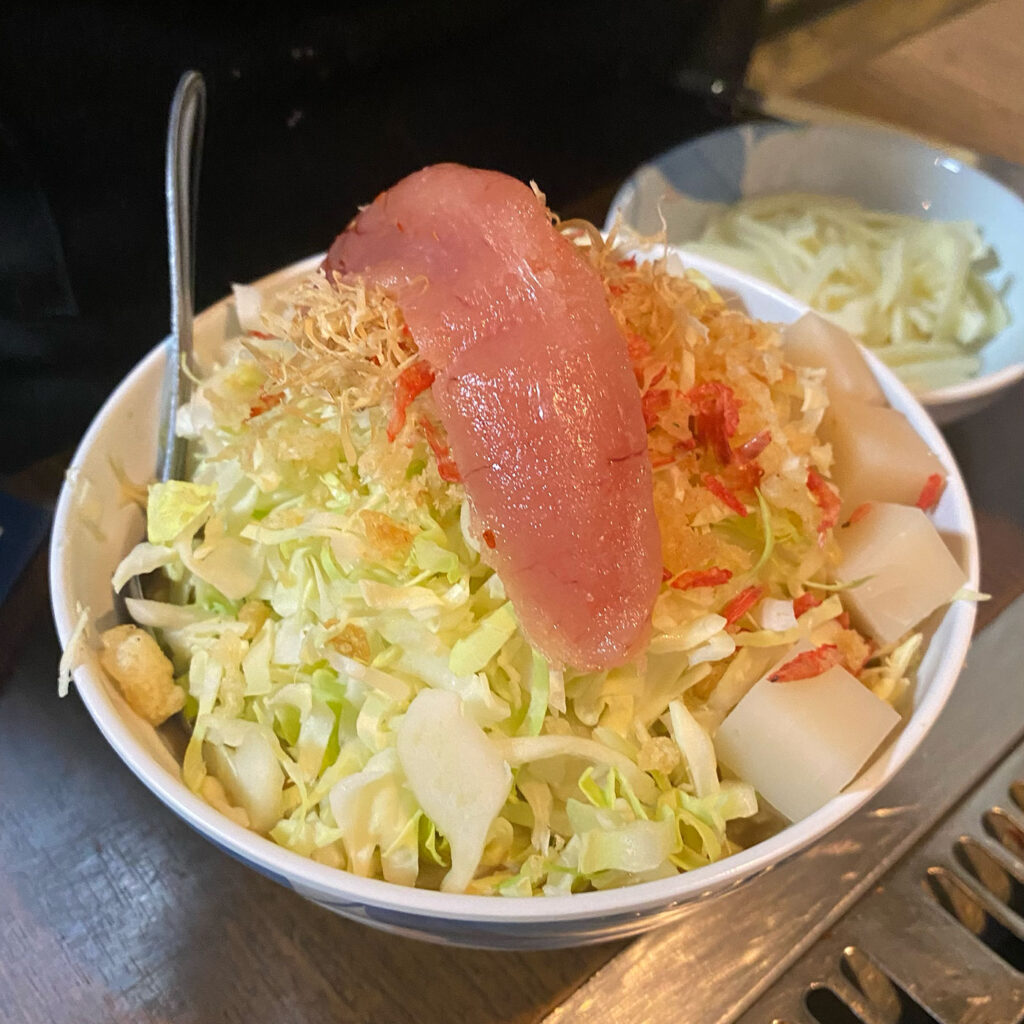
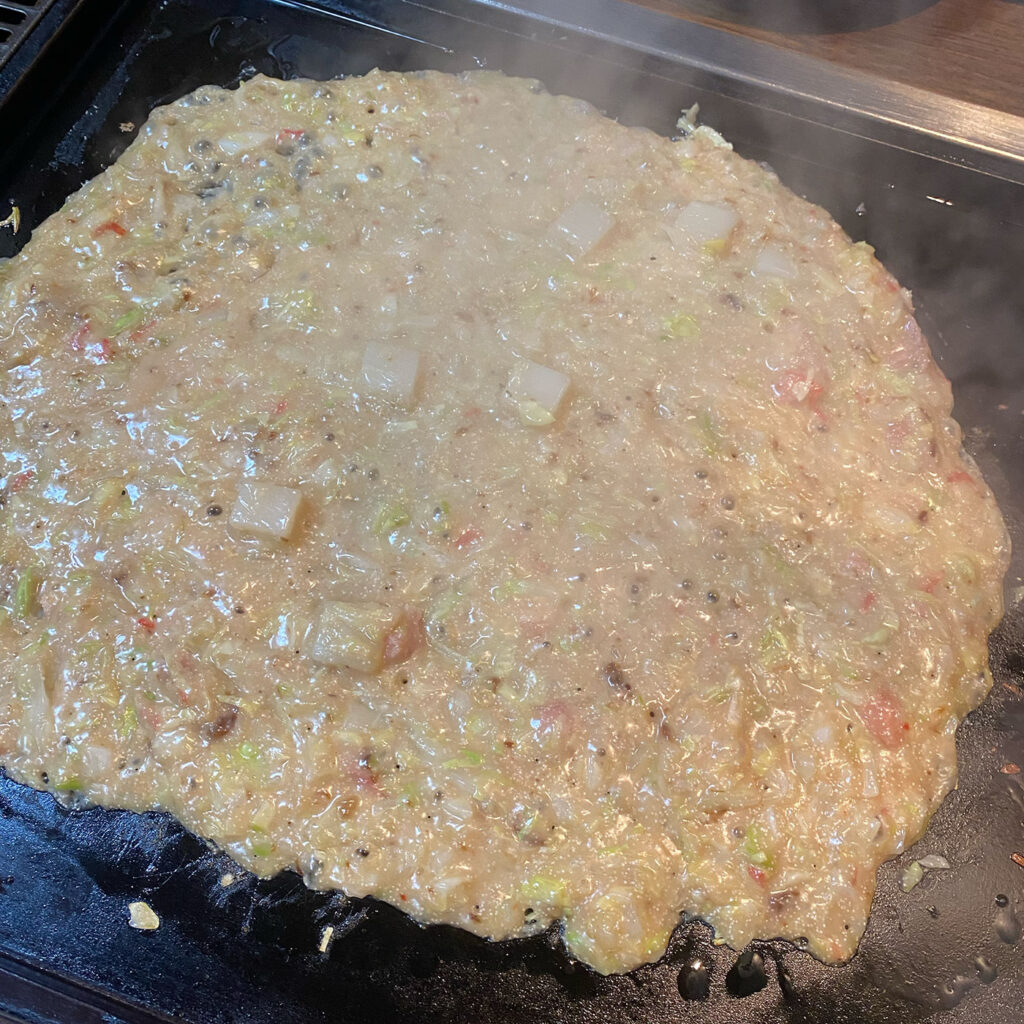
While okonomiyaki is associated with Osaka, monjayaki is a Tokyo-style dish. Considering the history of Tsukishima, it may also reflect influences from people who originally came from western Japan.
Differences Between Okonomiyaki and Monjayaki
The origin of monjayaki is said to be “moji-yaki” from the Edo period. Children would draw characters in batter on a hot plate and enjoy eating it as a simple snack.
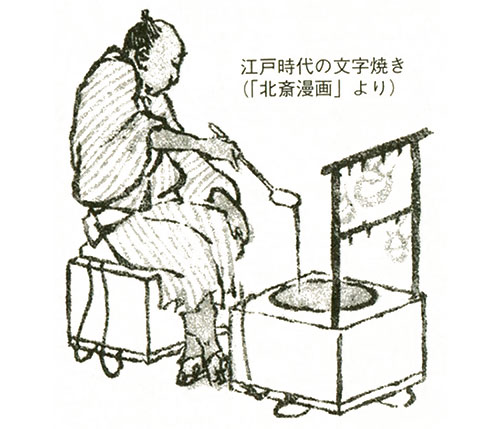
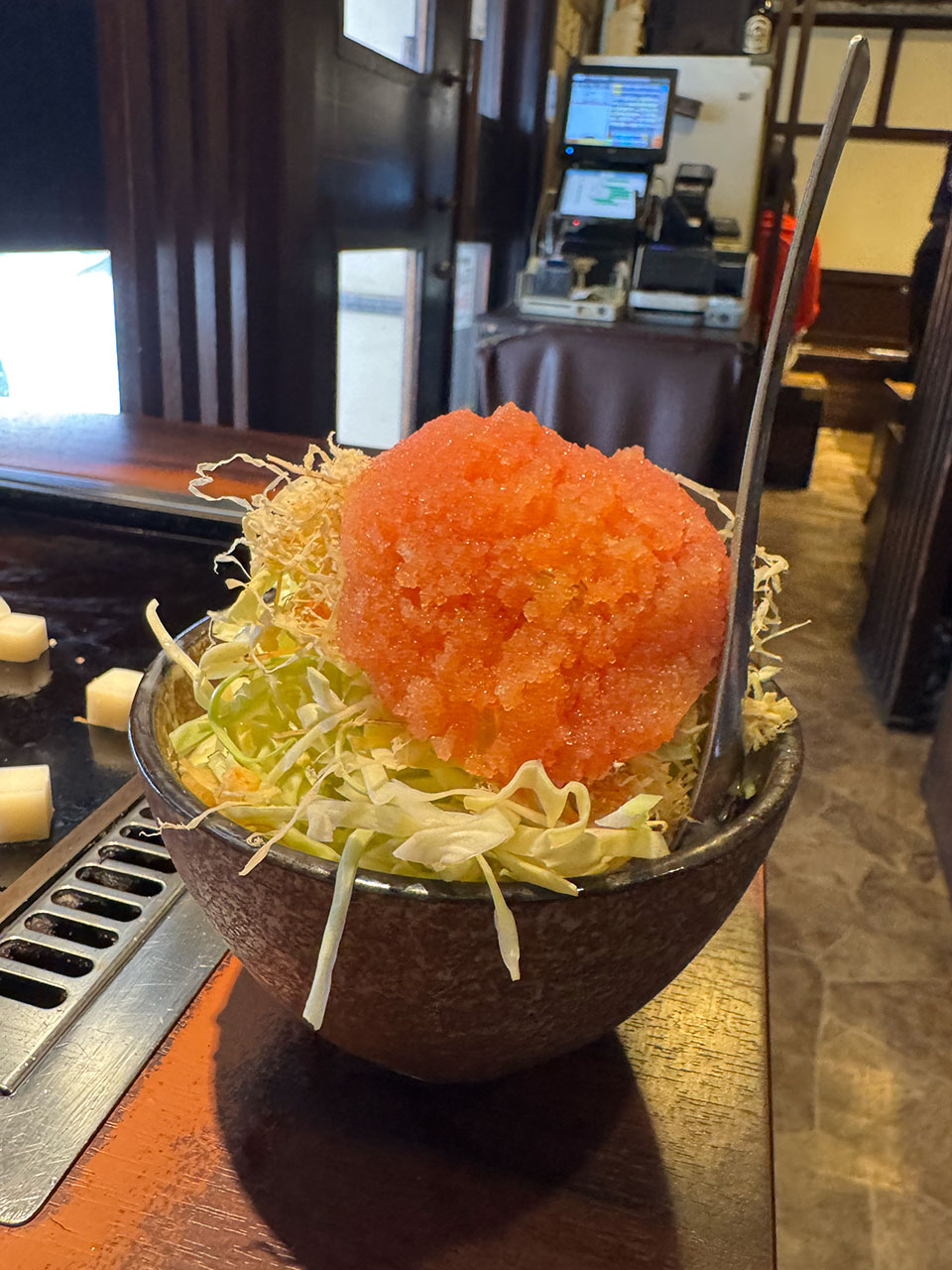
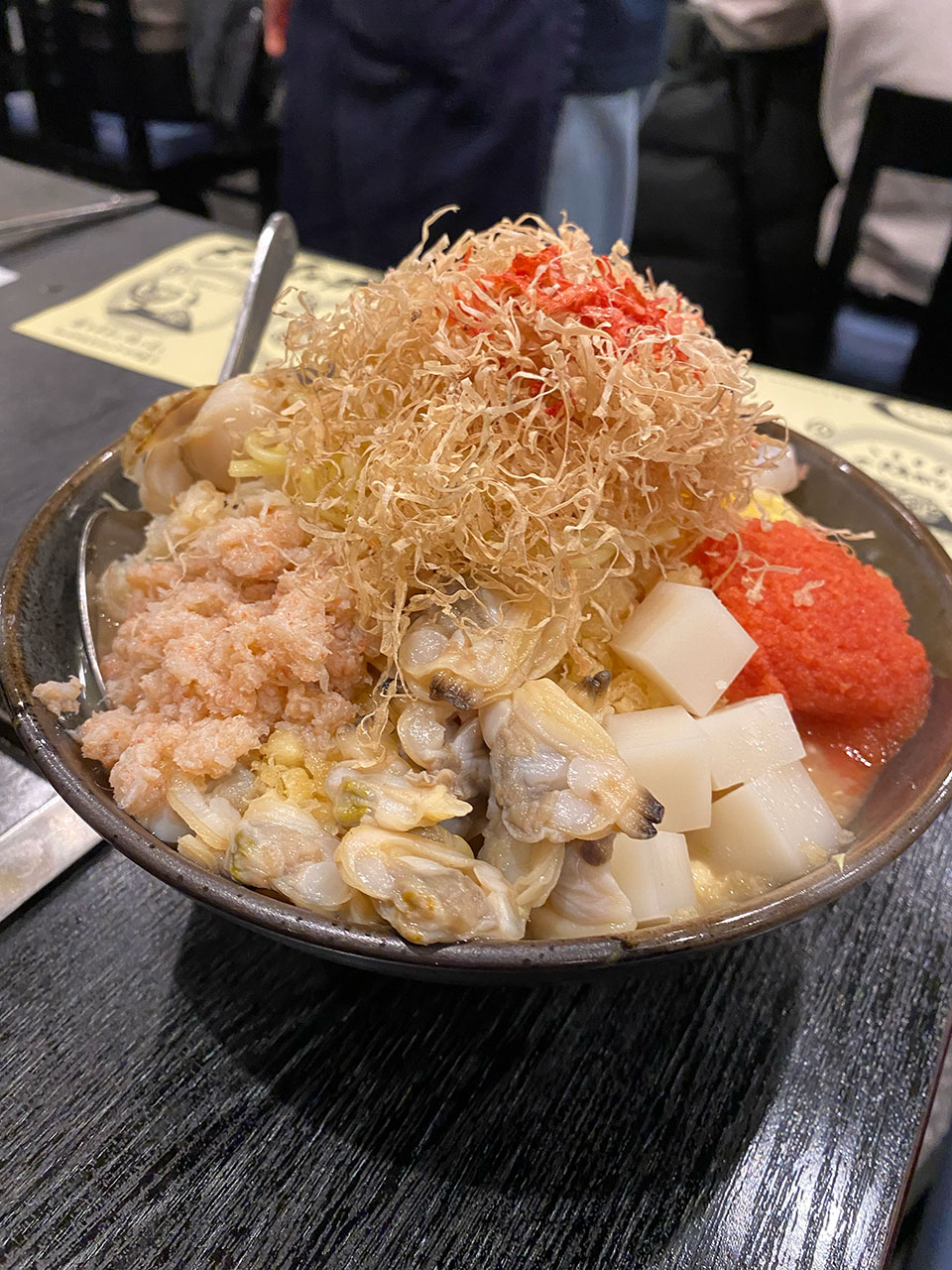
Monjayaki is made by pouring a thin batter made from wheat flour onto a hot plate, cooking it, and scraping the browned parts with a small spatula called a teppan spatula (teko) to eat.
It is sometimes introduced in English as a “Tokyo-style hot plate dish.”
Although the ingredients are almost the same as okonomiyaki, the appearance and eating style are very different.
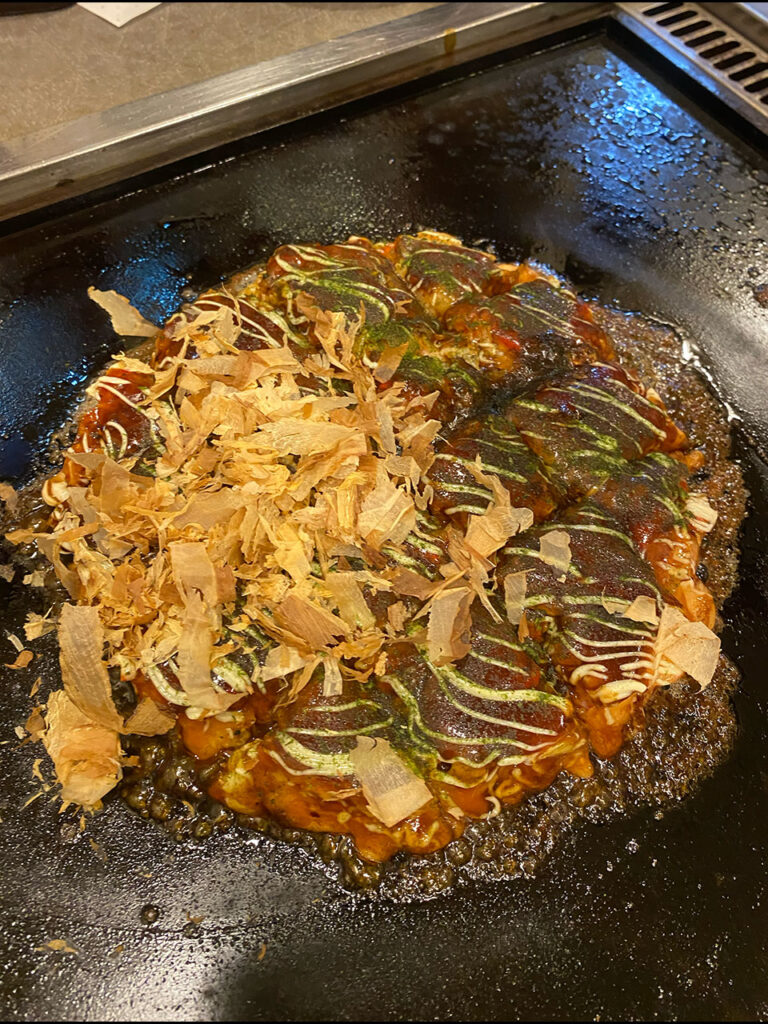
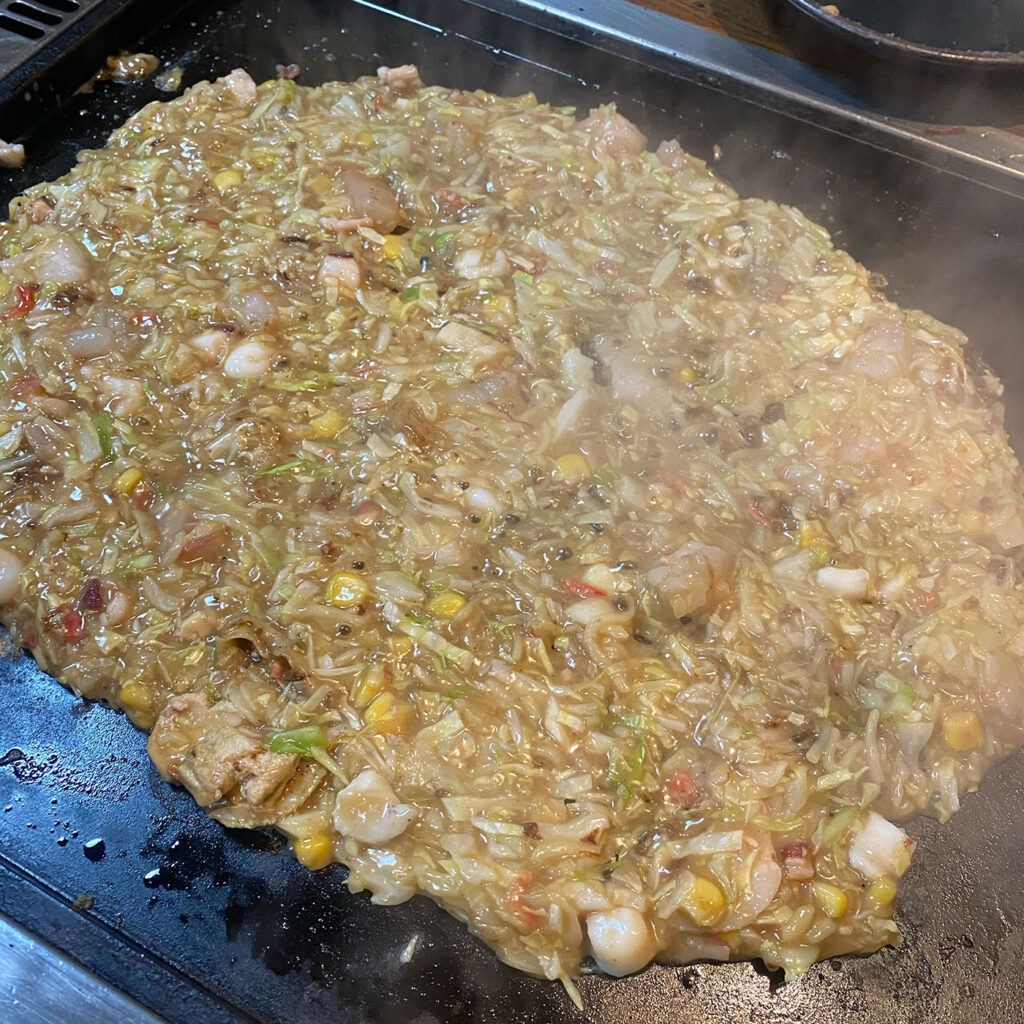
Here is a simple comparison:
- Monjayaki: thin, runny batter; spread on a hot plate; eaten gradually with a small spatula
- Okonomiyaki: thicker batter; cooked into a solid shape; topped with sauce and mayonnaise; more visually structured
When people first see monjayaki, some may think, “It looks like vomit…” This reaction is actually quite common among first-time visitors.
I personally like monjayaki, but I still find oatmeal a bit difficult. Because the appearance and texture are somewhat similar, this feeling may be relatable for many international visitors.
On the other hand, okonomiyaki is finished with sauce and mayonnaise, giving it a visually appealing look. Although they are similar in ingredients, they are completely different dishes.
Monjayaki and Japanese Culture of Sharing
Monjayaki is typically eaten by sharing a hot plate with others. It cannot be taken out, as it is meant to be enjoyed on the spot together.
In Japan, sharing food has cultural meaning. For example, the act of sharing a drink is not just about drinking together, but is considered a symbolic moment of building a relationship. This is seen in traditional ceremonies such as weddings, where people share sake to mark new bonds.
Another example is ordering beer in bottles and pouring for each other, which reflects a culture of mutual care within a community.
The act of gathering around smoke or heat—such as incense or a campfire—also represents sharing time and space together.
Similarly, monjayaki creates a shared experience by gathering around a hot plate and eating one dish together. This naturally encourages conversation and connection.
How to Enjoy Monjayaki Street in Tsukishima
Tsukishima has an area known as “Monja Street,” where many monjayaki restaurants line both sides of a shopping street stretching about 400 meters.
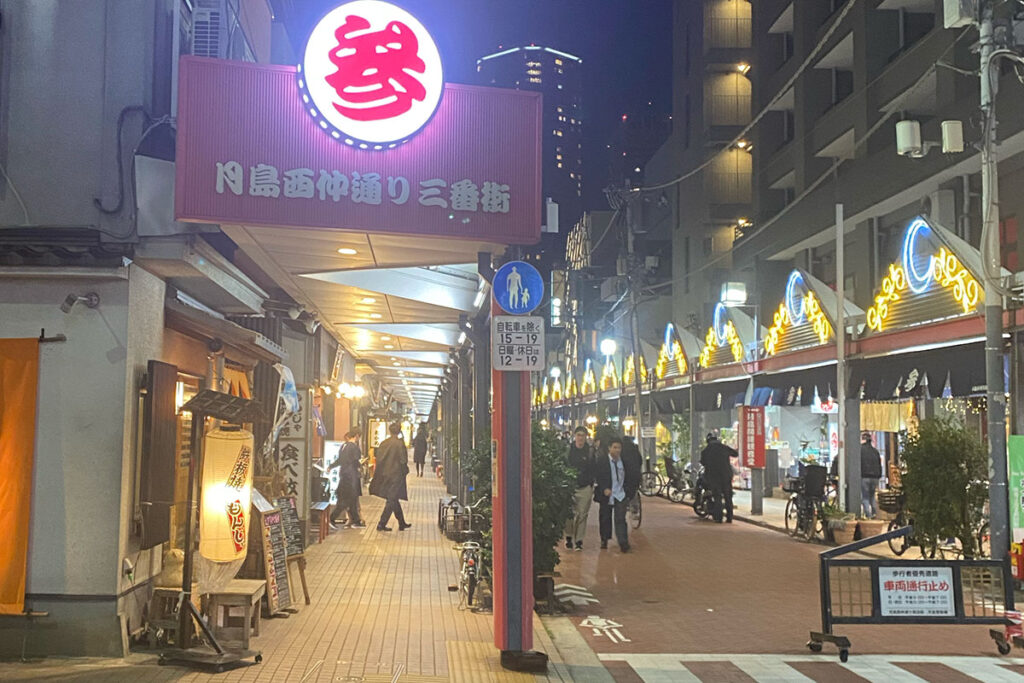
From Tsukishima Station, you will find a general information center, and the area is divided into blocks such as Ichibangai, Nibangai, Sanbangai, and Yonbangai. There are many member restaurants, but some popular shops may not be included, so it’s best to check in advance.
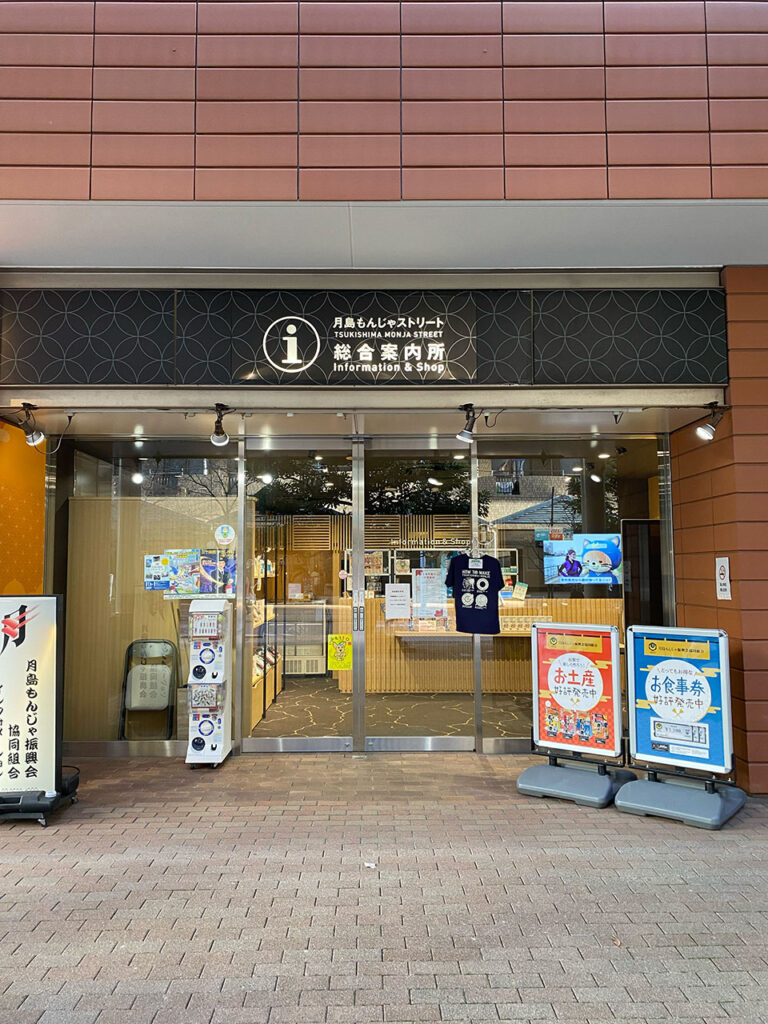
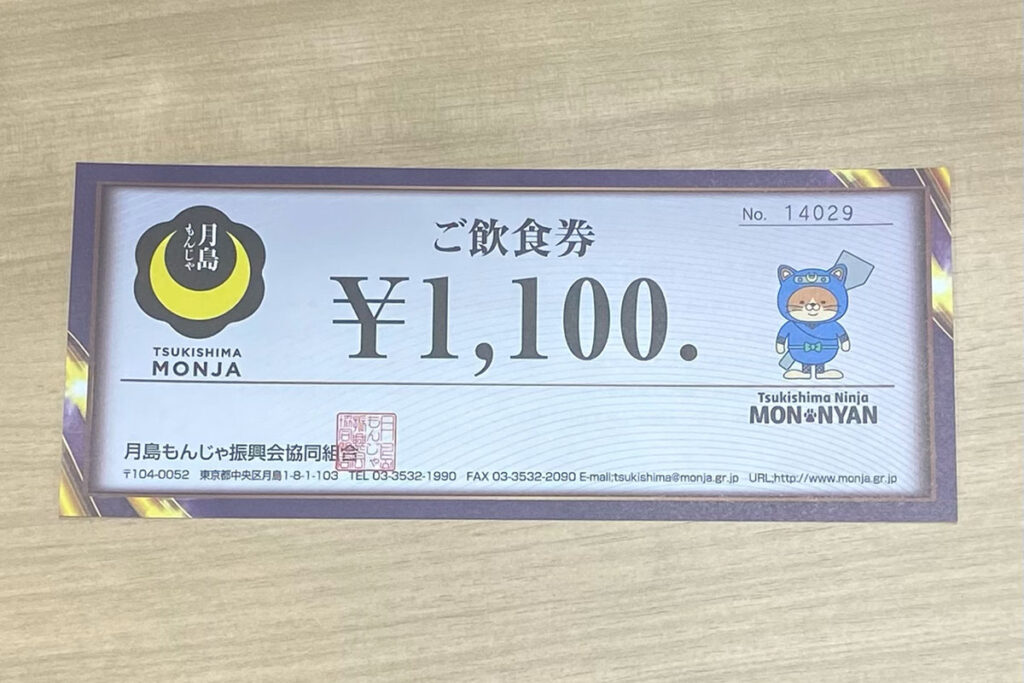
At the information center, you can purchase meal tickets. For example, a 1,100 yen ticket can be bought for 1,000 yen (no expiration). Buying tickets in advance allows you to enjoy a small discount.
Also, it tends to get crowded during dinner hours, so visiting a bit earlier is recommended. If you are a first-time visitor, it’s helpful to confirm whether the staff will cook for you.
Summary
If possible, visiting with a group of around four people is ideal. You can try different varieties and share them, which enhances the overall monjayaki experience.
When you visit Tokyo, be sure to experience monjayaki in Tsukishima. Although it may look unusual at first, it offers a great opportunity to experience Japanese food culture and atmosphere.
Leave a Reply