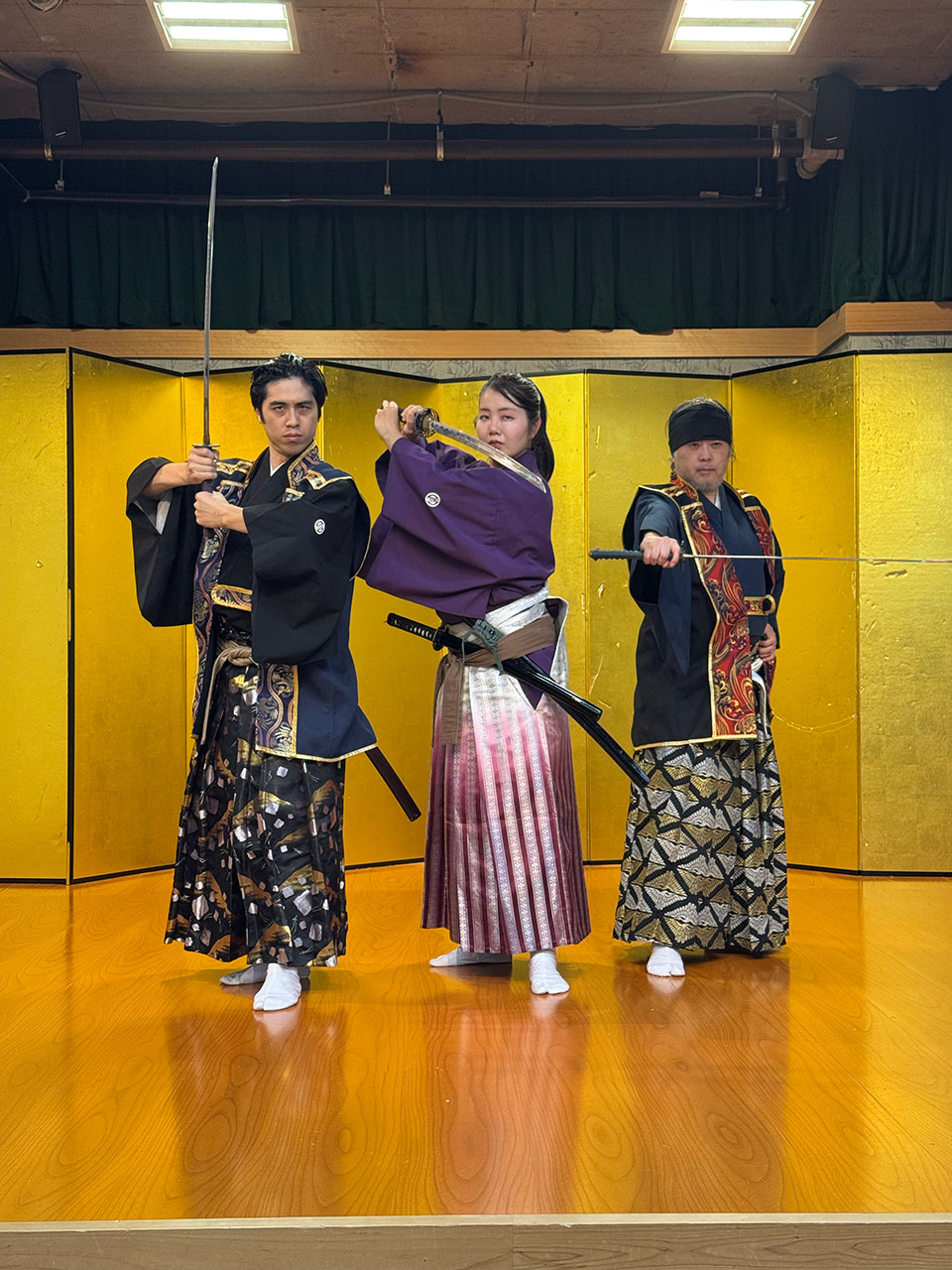
For the past few years, I’ve become interested in samurai culture. Whenever I find a samurai show or stage performance, I try to go and see it. This time, I visited the Samurai Kenbu Show in Kyoto.
Many samurai shows and experiences are designed mainly for foreign tourists as entertainment. Even some performances called Kenbu are more like dance shows with swords. But this place genuinely teaches and performs traditional Kenbu.
What is Kenbu?
Kenbu is very different from Tate (stage sword fighting).
Tate usually involves two or more performers crossing swords to create a fight scene. Kenbu, on the other hand, is a traditional Japanese performing art that uses a sword to express the world of poetry.
Samurai warriors used to recite Japanese poems (Waka) and Chinese poems before going into battle. In Kenbu, these poems are chanted in a style called Shigin, while performers use Japanese swords and fans to express the meaning of the poems through dance.
Kenbu expresses the spirit and aesthetic values of the samurai, combining elegance, beauty, and strength. Every movement has meaning, including the way performers hold their swords, walk, and bow.
Samurai experiences can be quite different depending on the instructor’s background. Some come from Japanese dance, others from Kenbu, and others from acting. Each has their own strengths and skills.
Kyoto Samurai Kenbu Theater
This was genuine Kenbu, not just a sword dance.
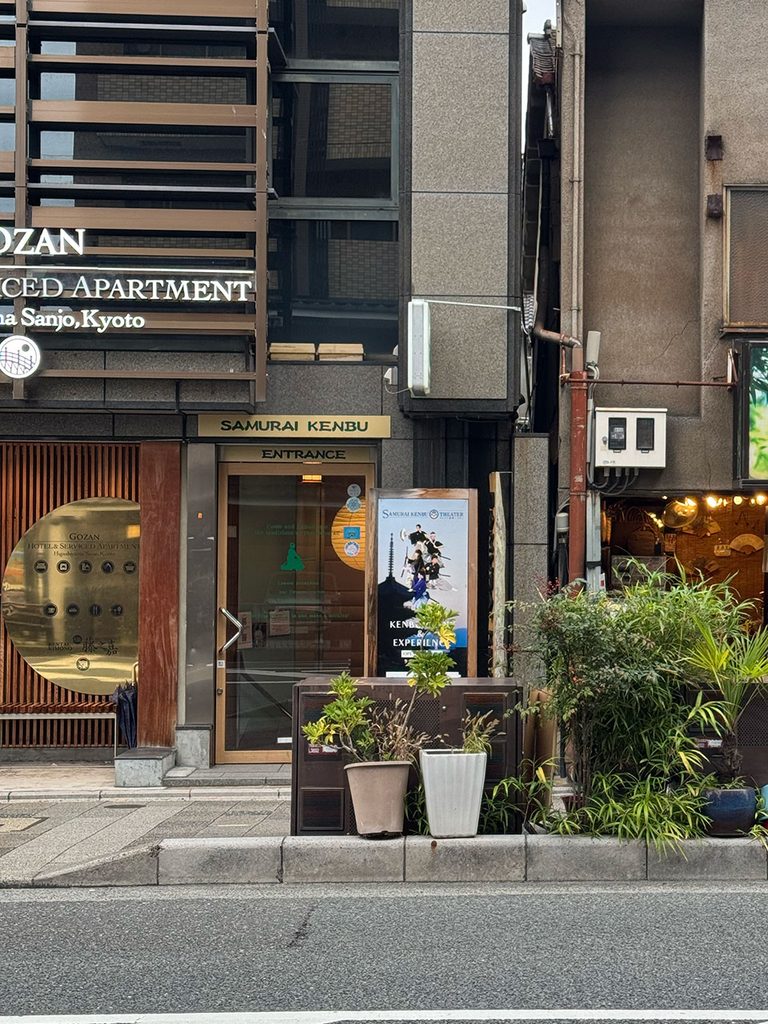
The show starts at 4:15 PM and lasts 60 minutes.
When you arrive, you take off your shoes and sit down. First, the performers introduce the history and techniques of Kenbu.
They then demonstrate different performances while explaining the basic movements of Kenbu and samurai culture.
The show features several short performances, each based on a different historical story or samurai figure, including the Battle of Kawanakajima, Kusunoki Masashige, and Kiso Yoshinaka. I had never heard of Kiso Yoshinaka before! They also gave a thoughtful explanation of Seppuku (ritual suicide), which can be a difficult subject to explain.
I was the only Japanese visitor. Everyone else was from overseas. Most of the explanations were in English, so I understood about 70% of what was said.
However, they carefully explained the meaning behind each movement, which made the show very educational. They explained not only the sword techniques but also how a fan can represent a bow or falling cherry blossoms.
I realized that Kenbu is a traditional performing art that expresses the spirit and aesthetic values of the samurai. You can even hear a sharp whoosh sound when the sword cuts through the air.
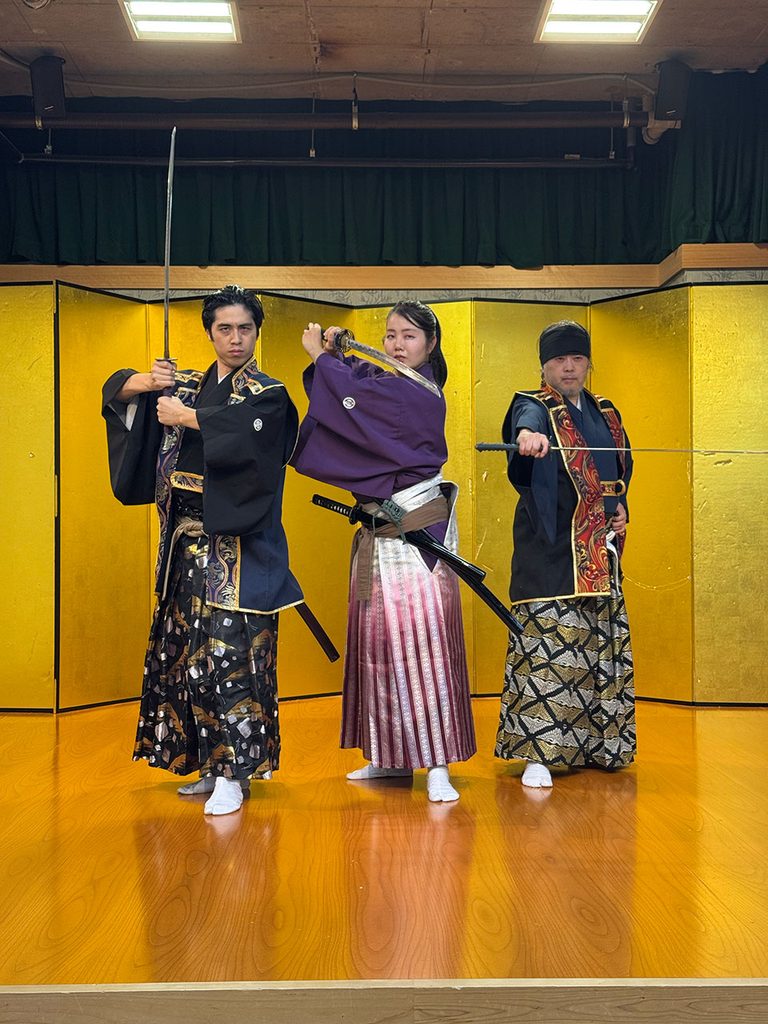
Photography is not allowed during the show, but there is time to take photos afterward.
A Short Samurai Experience
After the show, there is a short samurai experience lasting about 10 minutes.
Since I was the only Japanese visitor, Ryunosuke Magari gave me a private lesson. He taught me how to draw and return the sword to its scabbard, as well as how to perform Kesa-giri (a diagonal sword cut).
It was harder than I expected!
We also had a little chat. He told me that they run Kenbu classes in Shiga and perform samurai shows for international visitors in Kyoto.
I recommend this experience to anyone interested in samurai culture and traditional Japanese arts. However, if you are expecting flashy action scenes or sword fights like in samurai movies, this might not be what you are looking for.
Kyoto Samurai Kenbu Show
| Name | Kyoto Samurai Kenbu Show |
| Location | B1F GOZAN, 35-7 Sanjo-cho, Higashiyama Ward, Kyoto (about a 4-minute walk from Sanjo Keihan Station) |