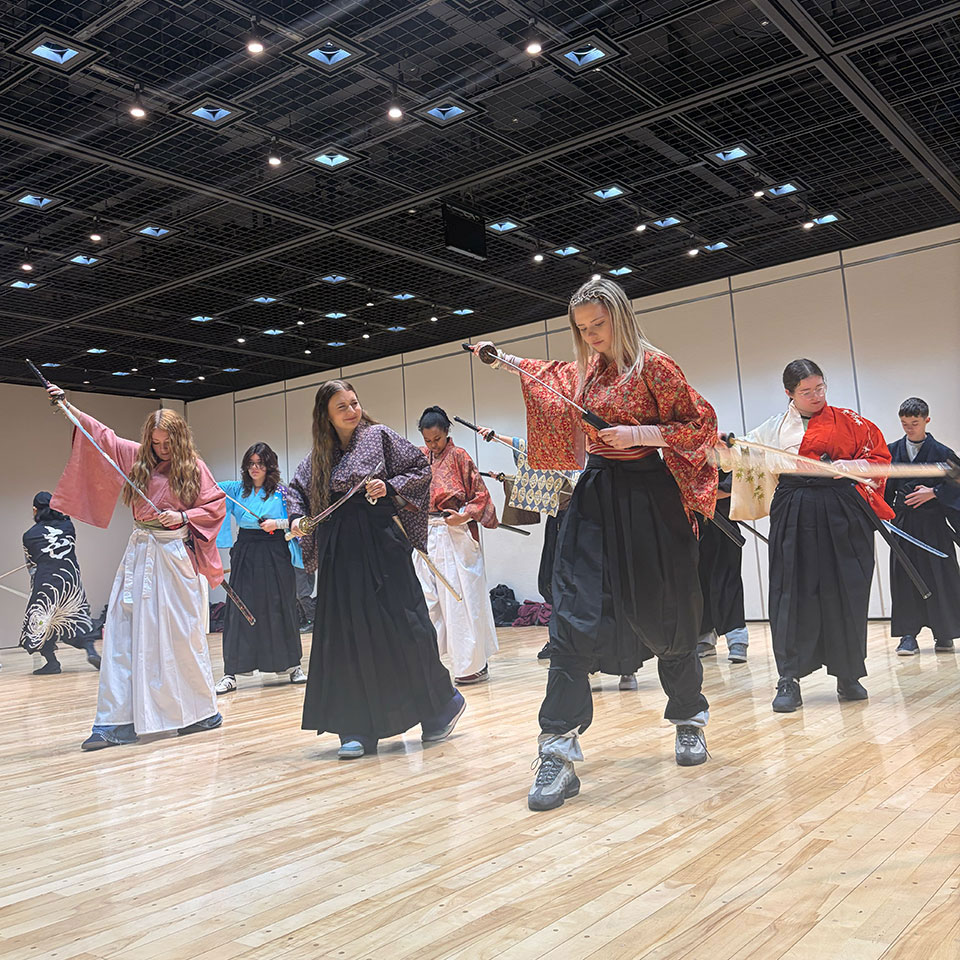
23 middle school students from London chose a samurai experience as part of their Tokyo trip. Accompanied by three teachers, the group included students aged 14 to 16. Their school, part of the Cabot Learning Federation, reached out after seeing our GetYourGuide reviews.
While we often run large workshops overseas, this time it was an authentic Tokyo experience. With a group this size, seven instructors guided the program. Students were split into three groups and all changed into samurai costumes. At first, they seemed a bit shy, but as soon as they put on the outfits, their expressions lit up.
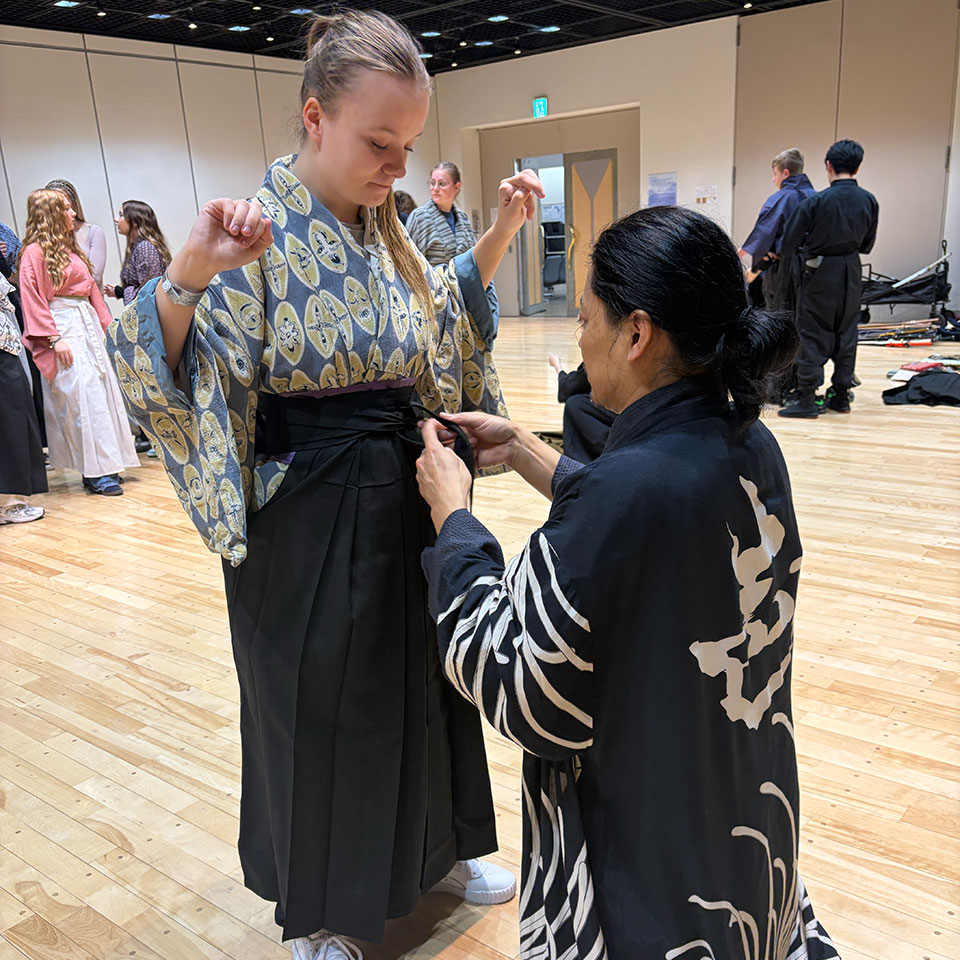
The program began with two samurai performances, showcasing both stillness and movement. One was a ‘Rurouni Kenshin‘ demonstration by Mizuno and Kume, and the other a traditional kata performance by Suzuki. The students felt the contrast between powerful action and calm focus firsthand.
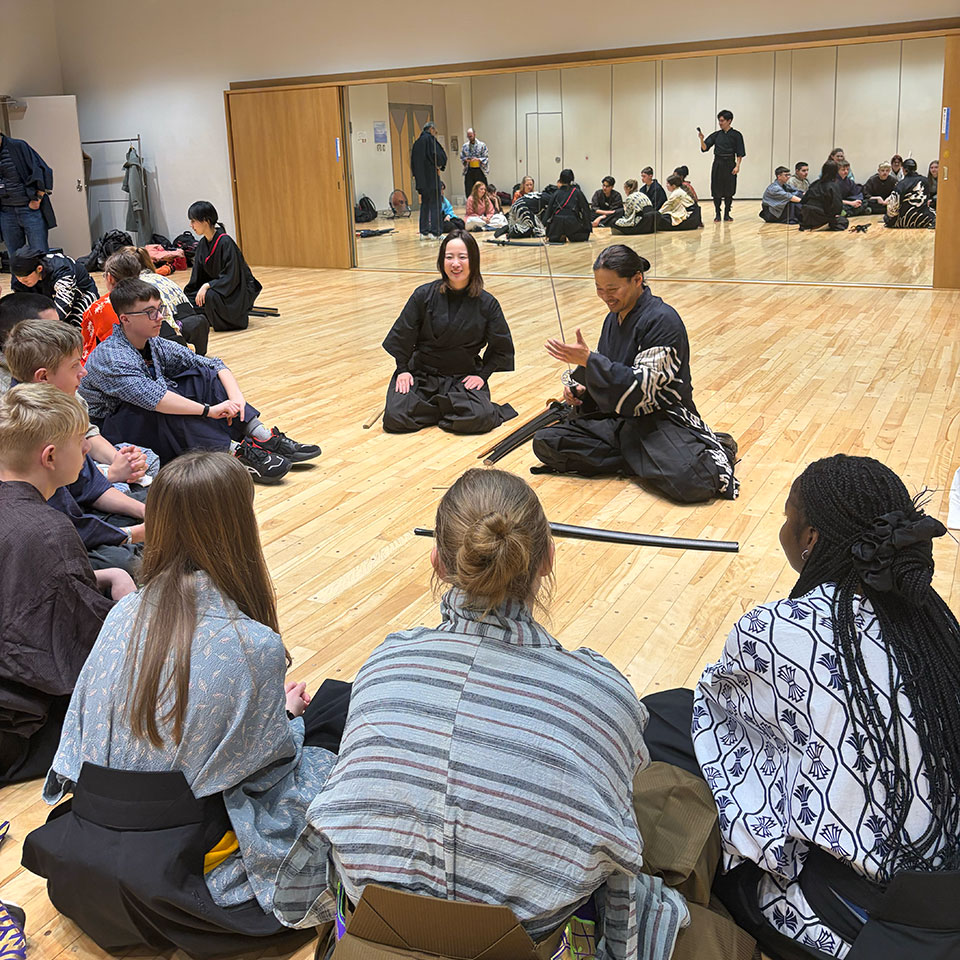
Next came a breakdown of replica Japanese swords, explaining each part. The students’ reactions differed from the teachers’: the students were excited to move and train, while the teachers were more fascinated by the sword’s structure. It was a fun insight into how interest changes with age.
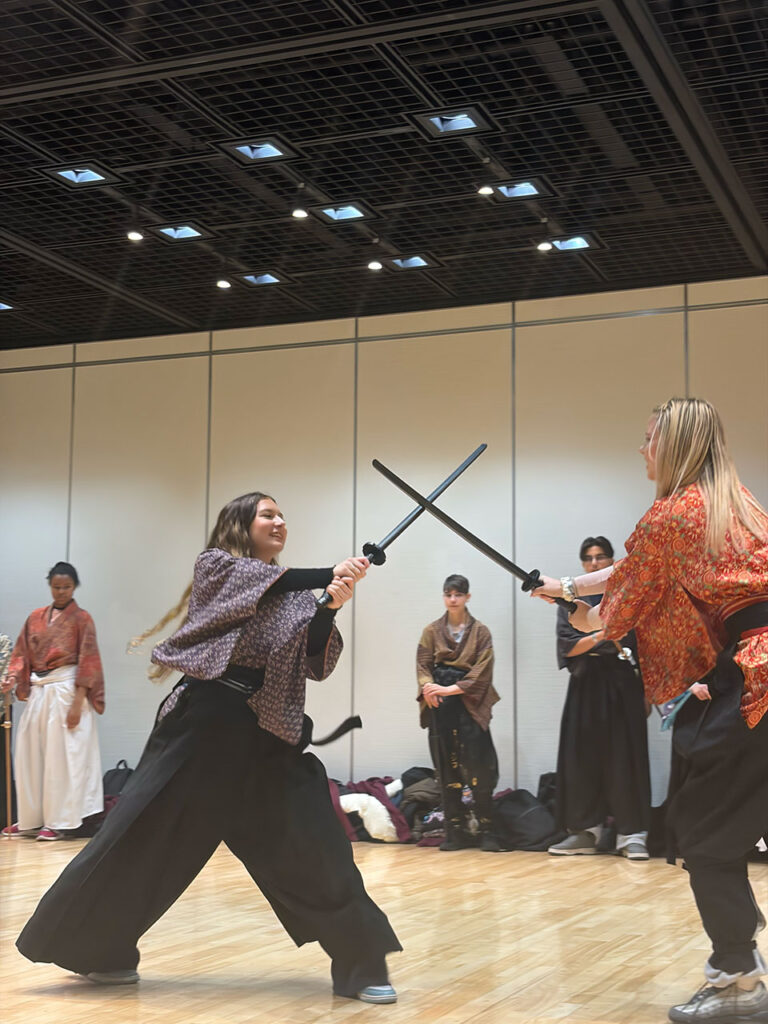
After the learning segment, it was time to practice. Students learned basic forms, trained in pairs, and then took part in sparring matches. Two female pairs performed in front of the group at the end, with everyone cheering and taking photos. By the final sparring, even the shyest students were fully into it.
The Q&A session was lively. A popular question was about tabi socks: “Why is the big toe separated?” We explained that it helps apply strength at the base of the toe and is a remnant of traditional footwear culture. Another common question was, “Do you hold a sword with one hand or both?” We explained that a katana is generally used with both hands, while ninja swords are shorter and often used one-handed.
The two-hour session flew by, longer than our usual 80-minute program, combining learning and practice seamlessly.
While we do large workshops overseas, we usually have to use foam swords. Being in Japan allowed us to offer an authentic, hands-on experience. It was a great confidence boost for us as instructors, and we were happy to provide students with a chance to learn together as part of their school program.
The teachers said, “It was fun! We want to leave a review somewhere.” Students told us it was “the most fun part of our Japan trip.” The instructors enjoyed teaching, and afterwards we all felt a strong sense of accomplishment, joking that we need to study more English.
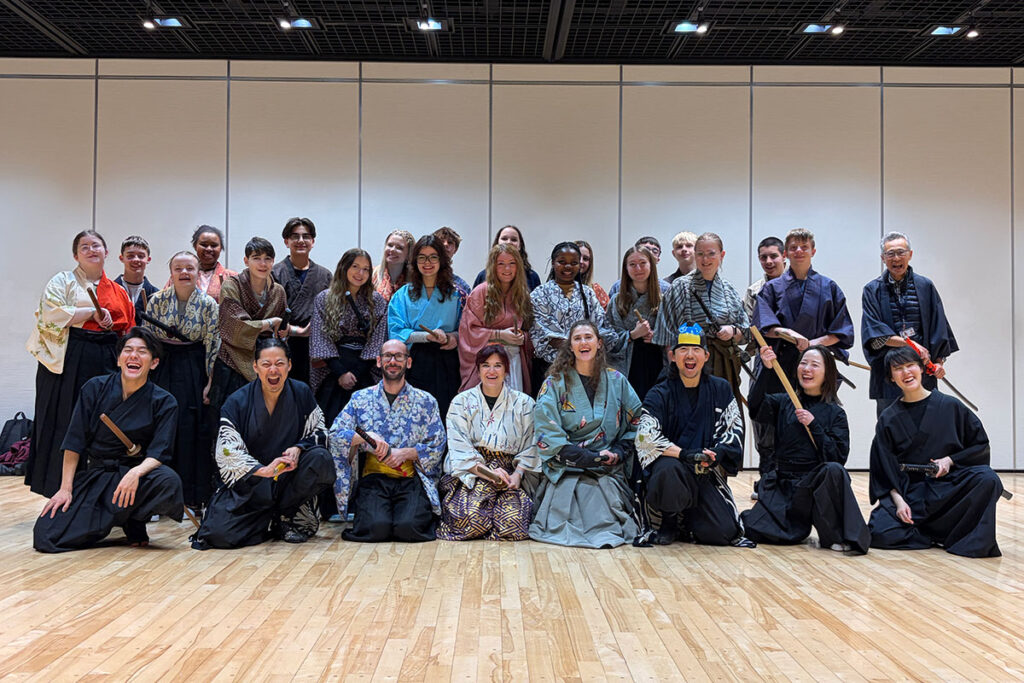
Our samurai experience can be customized for group size and schedule, making it perfect for school trips and group events. We’ll keep expanding our group programs to share samurai culture with even more people.
Leave a Reply